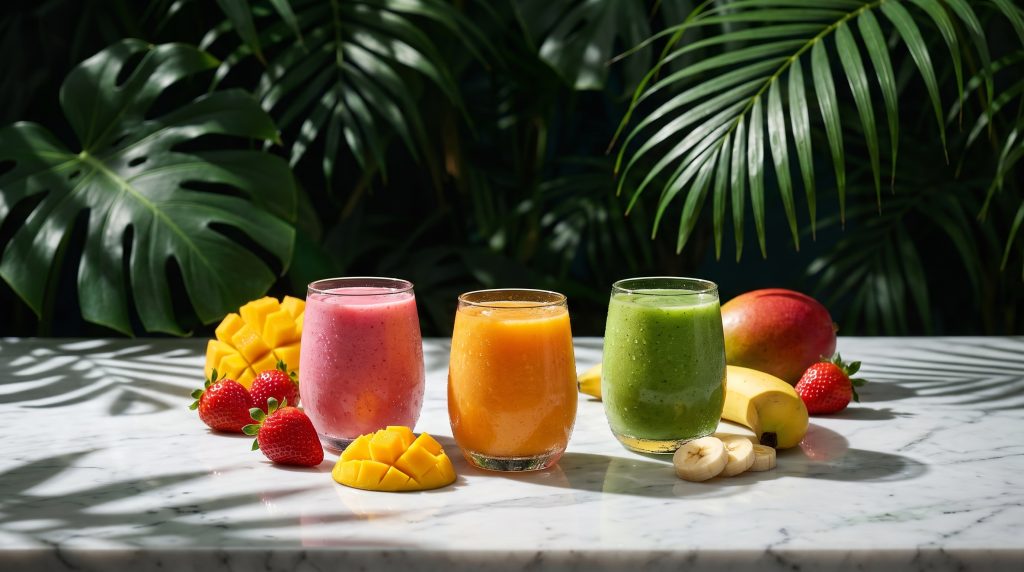
Healthy smoothies for kids: three simple recipes
A good smoothie for children is whole fruit blended with milk or a dairy-free alternative — no added sugar, no sweeteners, no juice used as filler. These three recipes take five minutes, use ingredients you are likely to have already, and are easy enough to make with the children helping.
Smoothies have a slightly mixed reputation because of the versions that are more sugar delivery system than actual food. The ones below are different — just fruit, oat milk or coconut milk, and the occasional spoonful of coconut yoghurt for creaminess.
What makes a smoothie good for kids?
A well-made smoothie for children is:
- Whole fruit, not juice. Blending preserves the fibre in the fruit, which slows sugar absorption and is far better nutritionally than juice. Juice extracts the sugar and leaves the fibre behind.
- No added sugar. Fruit is already sweet. There is no need to add sugar, syrup, or sweeteners to a children’s smoothie.
- No artificial sweeteners. Some commercial smoothies and smoothie powders use sweeteners to keep the calorie count down. These are not appropriate for young children.
- Simple ingredients. The fewer the ingredients, the easier it is to control what your child is having and to identify any sensitivities.
- Dairy-free if needed. Oat milk works brilliantly in smoothies — it blends smoothly, adds a gentle creaminess, and suits children who do not tolerate dairy.
Frozen fruit is ideal for children’s smoothies. It is typically frozen at peak ripeness, often cheaper than fresh, and creates a naturally cold, thick, smoothie-like texture without needing ice.
What to avoid in kids’ smoothies
- Honey for children under 12 months — risk of infant botulism; safe for children over one year
- Added sugar or flavoured syrups
- Protein powders unless specifically formulated and recommended for children by a health professional
- “Superfood” powders with unknown ingredients or strong flavours unfamiliar to young palates
- Large quantities of fruit juice as a base — too much free sugar
- Sweetened yoghurt as the main dairy component — use plain or coconut yoghurt instead
Recipe 1: Strawberry & banana smoothie (main recipe)
This is the one most children will love immediately — sweet, familiar flavours, naturally thick and creamy.
Ingredients (serves 1–2 children):
– 1 ripe banana
– 100g frozen strawberries
– 200ml oat milk (plain, unsweetened)
– 2 tbsp coconut yoghurt (optional — adds creaminess)
Steps:
1. Add all ingredients to a blender.
2. Blend on high until completely smooth — about 30–45 seconds.
3. Pour into a cup, tall glass, or fun vessel of the child’s choosing.
4. Serve immediately — smoothies are best fresh.
Tips: If the banana is very ripe (spotty), the smoothie will be sweeter and need no additions. If you want it thicker, use a frozen banana. If you want it thinner, add a splash more oat milk and blend again.
Recipe 2: Mango & coconut smoothie
Mango produces one of the naturally sweetest and creamiest smoothie bases there is. This one is particularly popular with children who like tropical flavours.
Ingredients (serves 1–2 children):
– 150g frozen mango chunks
– 150ml coconut milk (carton, not tinned)
– 50ml oat milk
– Optional: a few leaves of fresh mint blended in, or a small slice of lime squeezed in for freshness
Steps:
1. Add mango and milks to blender.
2. Blend until smooth.
3. Taste before serving — frozen mango is naturally very sweet, so no additions should be needed.
4. Pour and serve.
Note on coconut milk: Use the drinkable carton version, not tinned coconut milk (which is very thick and high in fat). This is suitable for children over one year as part of a varied diet.
Recipe 3: Blueberry & oat smoothie
Blueberries are among the most child-friendly fruits — sweet, purple, and visually compelling. Oats add a little body and staying power.
Ingredients (serves 1–2 children):
– 100g frozen blueberries
– 1 small banana
– 200ml oat milk
– 2 tbsp rolled oats
– Optional: 1 tbsp plain yoghurt or coconut yoghurt for extra creaminess
Steps:
1. Add all ingredients to blender.
2. Blend until smooth — the oats will incorporate fully if blended for a full minute.
3. Pour and serve. If the texture is too thick, add a splash more oat milk and blend briefly.
Note: The blueberries will turn this a spectacular shade of purple. Children find this either thrilling or alarming, depending on the child.
Tips for smoothie-making with children
Let them choose. Children who pick the ingredients are significantly more likely to drink the result. Keep a supply of frozen fruit and let them point at what goes in.
Let them help. Older children can add ingredients to the blender, push the button, and pour into cups. Even toddlers can hold a strawberry over a blender with guidance.
Frozen fruit is your friend. It is cheaper than fresh, lasts indefinitely in the freezer, and creates a better texture in smoothies than fresh fruit at room temperature.
Vary the vessel. A smoothie in a striped paper straw in a clear glass is vastly more exciting to a five-year-old than the same smoothie in a plastic cup. Small details matter.
Smoothies at Framberry
All Framberry smoothies are vegan, made with whole fruit, and free from added sugar and artificial sweeteners. They are halal-friendly and kosher-friendly as standard. Family groups are genuinely welcome — children get their babychino free with any adult drink, and the smoothie menu has plenty of options everyone can share.
Find out more on our smoothies menu page.
Frequently asked questions
Q: Are smoothies healthy for kids?
A: Whole fruit smoothies made with no added sugar are a reasonable way to get fruit into children. They should complement rather than replace whole fruit, which provides more fibre when eaten rather than blended. Avoid smoothies with added juice, sugar, or sweeteners.
Q: Can toddlers have smoothies?
A: Yes, from around 12 months when cow’s milk or suitable alternatives are introduced. Use oat milk rather than pure fruit juice as the liquid base, and keep ingredients simple. Check with your health visitor if you have any concerns about your child’s diet.
Q: What is the best milk for kids’ smoothies?
A: Oat milk blends well and has a mild flavour. Whole cow’s milk makes a creamier smoothie. Coconut milk from a carton adds tropical flavour. All work. Avoid rice milk for children under 5 (naturally occurring arsenic content).
Framberry is opening in London in 2027 with a full smoothie menu made for the whole family — vegan, no added sugar, and genuinely delicious. Join the list to hear when we open.