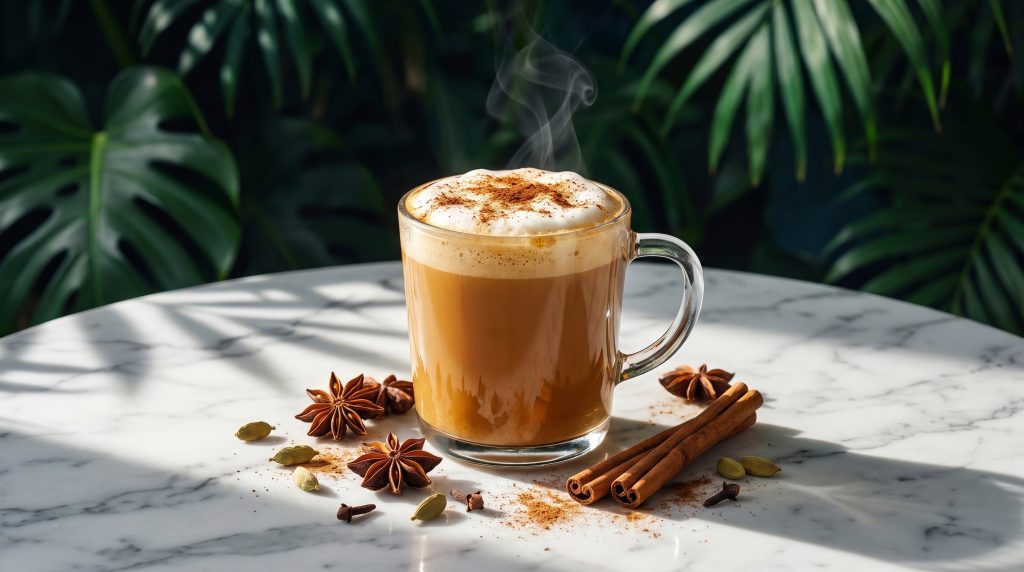
What is a chai latte? Everything you need to know
A chai latte is a drink made with spiced tea — typically a blend of cinnamon, cardamom, ginger, cloves, and black pepper — combined with steamed milk. It contains no coffee. The caffeine comes from black tea, usually around 40–70mg per cup — roughly similar to a single espresso. It’s warming, aromatic, and naturally vegan when made with plant milk.
What is chai?
Before you can understand a chai latte, it helps to understand chai.
“Chai” simply means “tea” in Hindi — and in much of the world, masala chai (spiced tea) is a daily staple. The traditional preparation involves simmering black tea with whole spices — typically cinnamon, cardamom, ginger, cloves, and black pepper — along with milk and often sugar or honey, producing a rich, spiced, warming drink.
The spice blend varies considerably by region, family, and preference. Some versions lean towards cardamom and ginger for freshness and heat; others emphasise cinnamon and cloves for depth. There is no single “correct” chai — it’s a framework, not a fixed recipe.
Chai has been a cornerstone of Indian and South Asian daily life for centuries. In a British café context, “chai” typically refers to a masala chai preparation, though the word itself technically covers all tea.
What is a chai latte?
A chai latte is the café adaptation of masala chai. It’s made by combining a spiced tea base — either brewed loose-leaf masala chai, a concentrated liquid chai, or a powdered chai blend — with steamed milk, in the same way a regular latte combines espresso with steamed milk.
The key distinction is this: a chai latte contains no coffee. It is a tea drink, not an espresso drink. This surprises a meaningful number of people who order it expecting an alternative to their usual coffee — and find themselves drinking something both familiar and completely different.
A chai latte is:
– Spiced black tea + steamed milk
– No espresso, no coffee
– Warm, aromatic, naturally slightly sweet
– Approximately 40–70mg of caffeine (from the black tea)
– Vegan when made with plant milk
Chai vs chai latte: what’s the difference?
| Traditional masala chai | Chai latte | |
|---|---|---|
| Base | Black tea simmered with spices | Brewed chai / concentrate / powder |
| Milk | Simmered with the tea | Steamed separately, then combined |
| Texture | Unified — milk and tea cooked together | Espresso-bar style — steamed milk poured over |
| Sweetness | Often includes sugar | Variable — often unsweetened or lightly sweetened |
| Setting | Home / street food tradition | Café / coffee shop |
The traditional preparation and the café version are distinct drinks — related, but different in texture and process. Traditional masala chai simmers the milk and tea together, producing a unified, slightly thicker liquid. A chai latte uses the espresso-bar approach of steaming milk separately and combining it with the tea base, producing a frothy, latte-style result.
Neither is more “authentic” than the other — they’re different formats of the same concept.
What’s in a chai latte? The spice profile
The core spices in a chai latte blend are:
Cinnamon — warm, slightly sweet, aromatic. The dominant flavour note in most Western chai blends. Provides the familiar warmth.
Cardamom — floral, slightly citrusy, intensely aromatic. A defining feature of South Asian masala chai. Often the most distinctive note in a well-made chai.
Ginger — warming, slightly spicy. Provides gentle heat without chilli-style sharpness. Often the note people recognise as creating the warmth in the throat.
Cloves — deep, woody, intensely aromatic. Used in small amounts — too much becomes medicinal.
Black pepper — adds gentle background heat and complexity. Often included in traditional recipes; less commonly prominent in commercial blends.
Some versions add star anise, vanilla, or nutmeg. The proportions determine the character of the final drink significantly — a cardamom-forward chai is elegant and aromatic; a ginger-forward version is warmer and more stimulating.
How much caffeine is in a chai latte?
A chai latte is made with black tea, which contains caffeine. A standard chai latte contains approximately 40–70mg of caffeine, depending on the strength of the tea base used.
This is:
– Roughly similar to a single espresso (~63mg)
– Considerably less than a flat white or latte (~126–150mg)
– More than most herbal teas (typically negligible or 0mg)
– Similar to matcha (~40–70mg)
A chai latte is not caffeine-free, but it’s a noticeably lighter caffeine source than most espresso drinks. For people who want something warm and flavourful in the afternoon without a significant caffeine hit, it’s a practical choice.
How is a chai latte made?
At a café, a chai latte is typically made using one of three methods:
1. From a liquid chai concentrate — the most common commercial approach. A pre-made spiced tea concentrate is poured into the cup, steamed milk is added, and the two are combined. Results vary considerably by brand and ratio.
2. From a powdered chai blend — similar to a powdered matcha preparation. The powder is mixed with a small amount of hot water or milk to form a paste, then steamed milk is added. Can produce a good result if the powder quality is high.
3. From fresh-brewed loose-leaf masala chai — the most involved and, typically, the best result. Whole or ground spices are brewed with black tea and a small amount of milk or water, producing a concentrated spiced tea base. Steamed milk is then added. Time-intensive but produces a drink that’s genuinely aromatic and layered.
Most café chai lattes use method one or two. The quality of the spice blend and the milk texturing make a significant difference to the result.
Chai latte with oat milk
A chai latte with oat milk is excellent — and at Framberry it’s our standard preparation. Oat milk’s natural sweetness pairs very well with the spice blend, particularly cinnamon and cardamom. It steams to a good texture for a latte-style preparation.
The result is also fully vegan, as traditional masala chai is sometimes made with full-fat dairy. With oat milk, the drink is naturally plant-based — no substitution required.
Is chai latte healthy?
This is the kind of question that deserves a measured answer rather than a marketing one.
Chai contains black tea, which is a source of antioxidants (polyphenols). The spices — particularly cinnamon, ginger, and cardamom — have well-documented culinary uses across many cultures and cuisines. Consuming warming, spiced tea with milk is not an inherently problematic thing.
Commercial chai concentrates and powders often contain added sugar, sometimes in significant amounts. If you’re watching sugar intake, it’s worth checking what your café uses or asking for an unsweetened version.
A chai latte made with a good spiced tea base, oat milk, and no added sugar is a straightforward, enjoyable hot drink. We’ll leave the superfood claims to others.
Framberry’s chai latte
Our chai latte is made with a spiced tea blend and steamed oat milk as standard. It’s on our hot drinks menu, alongside our matcha drinks, hot chocolate, and coffee range. It’s vegan by default and contains no coffee.
We’re opening in London in 2027 — the full hot drinks range will be available from day one. Join the list.
Frequently asked questions
Does a chai latte have coffee in it?
No. A chai latte is made with spiced black tea and steamed milk. It contains no espresso or coffee.
How much caffeine is in a chai latte?
Approximately 40–70mg, from the black tea in the base. This is similar to a single espresso and considerably less than a flat white or latte.
Can you get a chai latte without caffeine?
Some cafés offer a caffeine-free chai made with rooibos or herbal tea instead of black tea. These are often called “herbal chai” or “caffeine-free chai.” It’s worth asking — not all cafés offer this option.
Is a chai latte vegan?
Yes, when made with plant milk — oat, coconut, almond, or soy. Traditional masala chai is made with dairy; a café chai latte with oat milk is fully plant-based.
What’s the difference between a chai latte and a matcha latte?
Both are non-coffee hot drinks made with steamed milk. The difference is the base: chai latte uses spiced black tea; matcha latte uses powdered green tea. The flavours are completely different. Chai is spiced and warming; matcha is earthy and slightly grassy. Both are on our hot drinks menu.
Chai latte, hot chocolate, matcha, cortado — all the good things in one place. Framberry opens in London in 2027. Join the list.