Pet safety disclaimer: This post is for general information only and does not constitute veterinary advice. Always consult your vet about your dog’s individual dietary needs, particularly if your dog has any health conditions.
Can dogs have a puppuccino? Is it safe?
It depends entirely on what is in it. Plain unsweetened whipped cream — the most common version — is not toxic to dogs in small amounts, but it is very high in fat and not something to give regularly. Framberry’s puppychino is carob-based, which is the safer and more considered option. What dogs must never have is anything containing chocolate, cocoa, xylitol, or caffeine — these are genuinely dangerous.
This question matters because “puppuccino” has become a broad term and cafés vary significantly in what they actually put in the cup. Knowing what to look for — and what to avoid — is the whole game.
What is usually in a puppuccino?
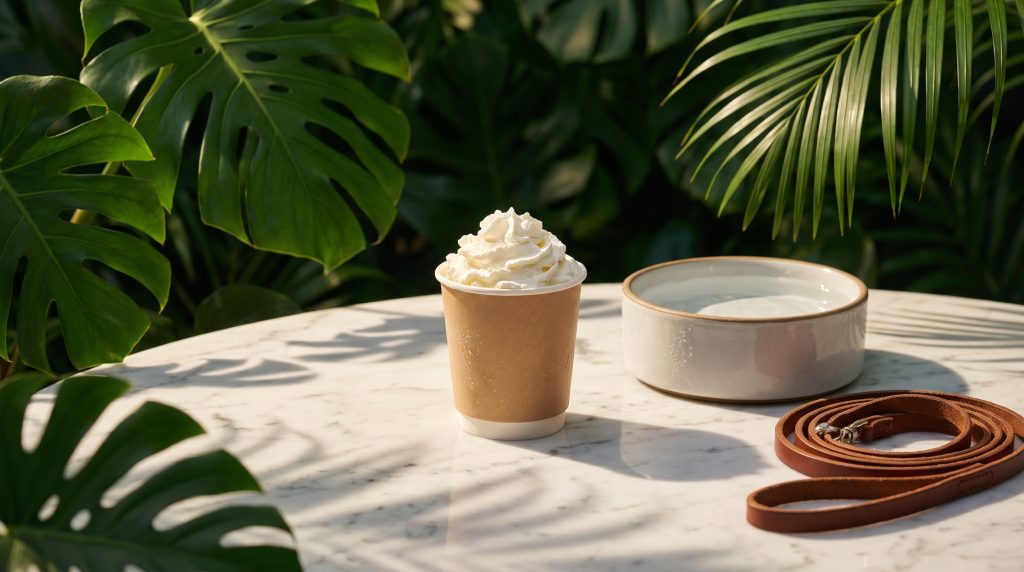
The word “puppuccino” most commonly refers to a small cup of plain unsweetened whipped cream, a format made popular by Starbucks in the US. This spread to dog-friendly cafés worldwide, and many now offer some variation — sometimes cream, sometimes something else, sometimes a biscuit alongside.
Framberry’s version is called a puppychino, and it is carob-based rather than cream-based. Carob is a pod-fruit with a naturally sweet, mild flavour; it contains no theobromine and no caffeine, making it genuinely dog-safe in a way that goes beyond “not immediately harmful.”
Before giving your dog a puppuccino anywhere, the question to ask is: what is actually in this?
Is plain whipped cream safe for dogs?
Plain unsweetened whipped cream is not toxic to dogs. Dogs can digest dairy, though some individuals are lactose intolerant and may experience digestive upset — loose stools, gas, or a stomach ache — after eating it.
The more significant concern is fat. Whipped cream is very high in fat, and:
- A single small treat is unlikely to cause problems for a healthy dog
- Regular or large amounts can cause weight gain and digestive issues
- For dogs prone to pancreatitis — a painful inflammation of the pancreas triggered by high-fat foods — even a small amount can bring on an episode
- Dogs on a restricted or medically supervised diet should not have cream without veterinary guidance
The critical word in all of this is “plain.” Whipped cream that contains sweeteners — particularly xylitol — is not safe. Some flavoured creams, aerosol whipped creams, and “light” versions contain xylitol, which is extremely dangerous for dogs. Always check the label or ask café staff about the specific product they use.
What about chocolate or cocoa? Why are they dangerous?
Chocolate contains theobromine, a compound in the methylxanthine family that dogs metabolise far more slowly than humans. What a human processes in a few hours can remain in a dog’s system for up to 18 hours, and the cumulative effect can be severe.
Symptoms of chocolate poisoning in dogs include:
– Vomiting and diarrhoea
– Excessive thirst and urination
– Restlessness and hyperactivity
– Muscle tremors
– Seizures
– In serious cases, cardiac arrhythmia and death
The darker and more concentrated the chocolate, the more theobromine it contains — and the smaller the dog, the more dangerous a given amount. There is no safe amount of chocolate for dogs; it should be treated as a substance to keep entirely away from them.
Cocoa powder is among the most concentrated forms of theobromine. A babychino has a decorative dusting of cocoa on top; a puppychino should have none at all. Never give a dog anything containing cocoa.
If your dog has consumed chocolate, contact your vet or the Animal Poison Line (UK: 01202 509000) immediately. Do not wait for symptoms to appear.
What is xylitol, and why is it so dangerous?
Xylitol is an artificial sweetener used in many “sugar-free” or “light” food products — including some chewing gums, peanut butters, aerosol whipped creams, flavoured beverages, and baked goods. It is safe for humans but causes a rapid, severe insulin response in dogs.
In dogs, xylitol ingestion can cause:
- Rapid hypoglycaemia (dangerously low blood sugar) within 30 minutes
- Vomiting and lethargy
- Loss of coordination
- Seizures
- Liver failure
- Death
Even small amounts are dangerous. A single stick of xylitol-sweetened chewing gum can cause serious harm to a small dog. The PDSA and Kennel Club UK both list xylitol as one of the most acutely toxic substances dogs commonly encounter.
Before giving your dog any human food product, check the ingredients list for xylitol (also listed as E967 in European labelling). If you are at a café and unsure what is in their dog treat, ask.
Is caffeine safe for dogs?
No. Caffeine — found in coffee, tea, energy drinks, some medications, and to a lesser extent in chocolate — affects dogs’ hearts and nervous systems. Symptoms of caffeine toxicity in dogs include restlessness, rapid breathing, muscle tremors, fits, and heart problems.
A puppychino should never contain coffee or tea. Matcha, while safe for humans in moderate amounts, contains caffeine and should not be given to dogs. Decaffeinated products are generally safer but still not worth the risk without veterinary guidance.
Why is carob the better option?
Carob comes from the pod of the carob tree (Ceratonia siliqua) and has a naturally sweet, mildly chocolatey flavour. It has been used as a chocolate substitute in dog treats for many years because it shares some of the appealing flavour profile of chocolate with none of the danger:
- No theobromine
- No caffeine
- Naturally sweet — no need for added sweeteners
- Safe for dogs when given in appropriate amounts
Framberry’s puppychino uses carob powder frothed gently with milk, served at room temperature. It has no chocolate, no cocoa, no sweeteners, and no caffeine. It is made with dogs in mind, not as an afterthought.
How often can a dog have a puppychino?
Treats should make up no more than 10% of a dog’s daily caloric intake — a rough guide recommended by most veterinary guidance. A puppychino is a café treat, not a meal, and should be offered occasionally rather than on every visit.
Factors that influence how often is reasonable:
– The dog’s size (smaller dogs = lower caloric threshold for treats)
– The dog’s health status (pancreatitis, diabetes, kidney conditions all affect what is appropriate)
– What else the dog has eaten that day
– The specific ingredients in the puppychino
For a healthy dog of a normal size, a carob-based puppychino at Framberry is a safe occasional treat. For dogs with any health conditions, check with your vet.
Signs your dog may have reacted badly
If your dog has eaten something at a café and you notice any of the following, contact your vet promptly:
- Vomiting or diarrhoea within a few hours of the treat
- Lethargy or unusual tiredness
- Excessive thirst or urination
- Loss of coordination, trembling, or seizures
- Pale gums
If you suspect chocolate or xylitol ingestion specifically, do not wait — call your vet or the Animal Poison Line immediately.
Puppychinos at Framberry
Our puppychino is free with any adult drink at Framberry. It is carob-based, made without chocolate, cocoa, sweeteners, or caffeine. We serve it in a small dog-friendly cup at room temperature. Dogs are welcome to sit with their owners inside and outside.
Find out more on our puppychino menu page.
Frequently asked questions
Q: Can dogs have the Starbucks puppuccino?
A: A small amount of plain unsweetened whipped cream is not toxic to most healthy dogs. The concern is fat content — especially for dogs prone to pancreatitis — and the risk that the specific product used contains xylitol. Check with the café about the exact product, and keep it as an occasional treat.
Q: What is the most dangerous thing in a puppuccino?
A: Xylitol is the most acutely dangerous ingredient that might appear in a dog café treat. Chocolate and cocoa are also seriously toxic. Plain cream is the lowest-risk option among commonly used ingredients, though it is still high in fat.
Q: Is carob really safe for dogs?
A: Yes. Carob contains no theobromine and no caffeine. It is widely used in dog treats specifically because it provides a chocolate-like flavour without the toxicity.
Q: My dog ate chocolate by accident. What should I do?
A: Contact your vet immediately or call the Animal Poison Line (UK: 01202 509000). Do not wait for symptoms. The sooner treatment begins, the better the outcome.
Q: Can puppies have a puppychino?
A: We would recommend caution with very young puppies and suggest checking with your vet before introducing any treats outside their normal diet. Framberry’s carob-based puppychino is designed for adult dogs as an occasional treat.
At Framberry, dogs drink free. Our puppychino is carob-based and made properly for dogs — no chocolate, no xylitol, no caffeine. Opening in London in 2027. Join the list to hear when we open.