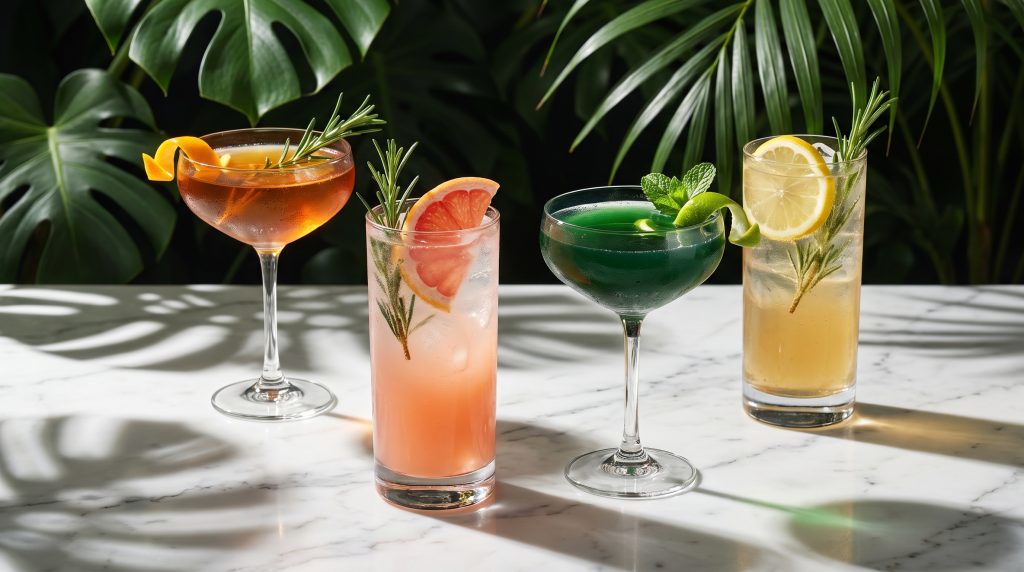
Sober-curious is one of those phrases that sounds like a trend but describes something much more ordinary: choosing, some or all of the time, to drink something other than alcohol. Not necessarily forever. Not necessarily with a label attached. Just intentionally.
The drinks have caught up with the movement. Where a decade ago your options were a Coke, an orange juice or a glass of tap water, there’s now a genuinely exciting range of non-alcoholic drinks available — in coffee bars, restaurants, pubs and increasingly in dedicated non-alcoholic spaces. Here’s a guide to the best of them.
What sober-curious actually means
The term sober-curious, popularised by Ruby Warrington’s 2018 book of the same name, describes a growing approach to drinking: questioning your relationship with alcohol intentionally, without necessarily committing to abstinence or attaching a label to it. You might be sober-curious if you:
- Drink less than you used to, and feel better for it
- Sometimes choose not to drink and want something genuinely interesting instead
- Don’t drink for a period (Dry January, for instance) and realise you want to extend it
- Never particularly liked alcohol much but felt socially awkward ordering something non-alcoholic
- Are pregnant, breastfeeding, driving, on medication, or halal or kosher observant
The key thing about sober-curious is that it’s about choice, not judgement. It doesn’t require alcohol to be positioned as bad or dangerous — plenty of people who drink happily and moderately also sometimes choose not to, and want something worth drinking when they do.
Why the sober-curious movement is growing
There are several things converging:
Younger generations are drinking less. Multiple surveys across the UK and Europe have shown declining alcohol consumption among 18–30-year-olds compared with previous generations. The reasons are various — health awareness, cost, mental health, cultural shifts.
The drinks have got much better. The non-alcoholic beer category alone has transformed over the past decade. Non-alcoholic spirits, low-alcohol wines, elevated mocktails and functional drinks have given bars and restaurants genuinely interesting options to offer.
There are more reasons to skip alcohol that have nothing to do with sobriety. Pregnancy. Driving. Medication. Halal and kosher dietary practice. Intermittent fasting. Recovery. Migraines. All of these mean that at any given gathering, a meaningful proportion of people aren’t drinking alcohol — and they’d like something good to drink.
The best non-alcoholic drinks to order
Matcha lattes
A ceremonial-grade matcha latte is one of the most interesting drinks available in a good coffee bar. It’s complex, slightly earthy, visually striking, and comes with a caffeine hit (38–70mg) combined with L-theanine for calm, sustained energy. It works hot, iced, or as a matcha lemonade. It’s a drink you nurse and enjoy rather than one you feel you’re settling for.
At Framberry, the matcha latte is the flagship drink. Made with ceremonial-grade matcha and oat milk as standard. See the matcha menu.
Elevated mocktails and non-alcoholic cocktails
The mocktail category has grown dramatically. The best versions are built with the same care as a cocktail: layered flavours, interesting garnishes, thoughtful presentation. A good bar will offer things like:
– Alcohol-free gin and tonics (brands like Seedlip or Lyre’s)
– Virgin piña coladas (pineapple, coconut cream, lime — ideally served in a real pineapple, which is exactly as joyful as it sounds)
– Shrubs and switchels (vinegar-based drinks with fruit and ginger — sharper, more interesting than they sound)
– Sparkling water with fruit infusions and herbs
The best thing about this category is that it’s visual, fun and social. A good mocktail can anchor you in a group setting just as well as a cocktail — which matters more than people say.
Quality cold brew coffee
Cold brew is smoother and less acidic than hot coffee, and enormously satisfying cold. A good cold brew with oat milk, or a cold brew tonic (cold brew over sparkling water with a twist of orange), is a genuinely sophisticated choice that doesn’t need to justify itself.
Flavoured sparkling water and shrubs
Not all non-alcoholic drinks need to be complex. A good sparkling water — flavoured with a squeeze of citrus, a dash of cucumber, or a sprig of mint — is refreshing, hydrating and feels deliberate. Fancy bottles help.
Fruit smoothies and functional drinks
A well-made fruit smoothie is both delicious and genuinely nutritious. At a place like Framberry, a mango, coconut and lime smoothie served over ice is every bit as satisfying as a cocktail, with the added benefit of actually hydrating you. See the smoothies menu.
For the functional angle — adaptogens, nootropics — see our functional drinks guide.
Non-alcoholic beers and wines
The quality here has genuinely transformed. Brands like Peroni Nastro Azzurro 0.0, Athletic Brewing (US-originated but widely available in the UK), and Seedlip have moved the needle significantly. If you want the social ritual of a beer or a glass of wine without the alcohol, the options are now legitimately good.
How to order without fuss
The moment that trips many sober-curious people up isn’t the drink itself — it’s how to order when they feel self-conscious or when a venue’s non-alcoholic options are poor.
A few practical things:
Have a go-to order. If you know what you want before you walk in, you don’t have to think about it in the moment. A matcha latte. A sparkling water with lime. A specific non-alcoholic beer you like. Having a default removes the awkward scanning of a drinks menu for something you actually want.
Ask confidently. Most bar and restaurant staff do not care whether you’re drinking alcohol. If the menu has limited options, a simple “what do you have that’s non-alcoholic?” is fine. You don’t owe an explanation.
Find places that have genuinely thought about it. The difference between a venue with two non-alcoholic options on the back page and a venue that’s built its entire menu around interesting non-alcoholic drinks is significant. Framberry is an example of the latter — everything on the menu is non-alcoholic, and it’s designed to be just as interesting and enjoyable as anything else.
Framberry: built for this
Framberry is a smoothie bar and speciality coffee shop opening in London in 2027. The entire menu is non-alcoholic — by design, not by accident. That means it’s a space where:
- Pregnant women and breastfeeding mums are among the majority, not the exception
- Halal and kosher followers never have to ask
- Drivers can have a genuinely interesting drink
- Non-drinkers aren’t handed a soft drinks menu designed as an afterthought
- And everyone — drinkers, non-drinkers, sober-curious, occasionally sober, always sober — has the same quality drinks to choose from
The piña colada in a real pineapple is not a joke. It’s what a social, joyful non-alcoholic drinks experience looks like when someone actually puts thought into it.
Join the list to be first to know when we open.
For more on navigating a social life with less alcohol — and loving it — see our mindful drinking guide.
Frequently asked questions
Is being sober-curious the same as being sober?
Not necessarily. Sober-curious describes an intentional, questioning approach to alcohol — which might result in drinking less, taking breaks, or ultimately not drinking at all. It’s a mindset, not a commitment to abstinence.
What are the best non-alcoholic drinks at a pub?
Non-alcoholic beer has improved dramatically — look for Athletic Brewing, Peroni 0.0 or Beck’s Blue. Most pubs now stock one or two decent options. If beer doesn’t appeal, a lime and soda or a sophisticated sparkling water often works better than a soft drink you don’t actually want.
Are non-alcoholic cocktails just as good as regular ones?
The best ones are genuinely excellent — complex, interesting and well-presented. A skilled bartender with good non-alcoholic spirits can make a drink that stands up in any company. The worst ones are watery fruit juice. Ask what your venue does well before ordering something mediocre.
Why does Framberry have no alcohol on the menu?
We made a deliberate decision to make Framberry a fully non-alcoholic space — not because we think alcohol is wrong, but because we wanted to create a place where everyone feels equally catered for. That means pregnant women, drivers, halal followers, non-drinkers and sober-curious visitors all have the same quality experience, without needing to explain themselves.
What can I drink socially instead of alcohol?
The options are broader than most people realise: good mocktails, matcha lattes, quality cold brew, non-alcoholic beers and wines, and good smoothies. The key is finding venues that have genuinely thought about their non-alcoholic offering — and having a go-to order ready so you don’t have to think about it in the moment.
Framberry opens in London in 2027 — an entirely non-alcoholic space where the drinks are built to be just as interesting and joyful as anything else. Join the list.