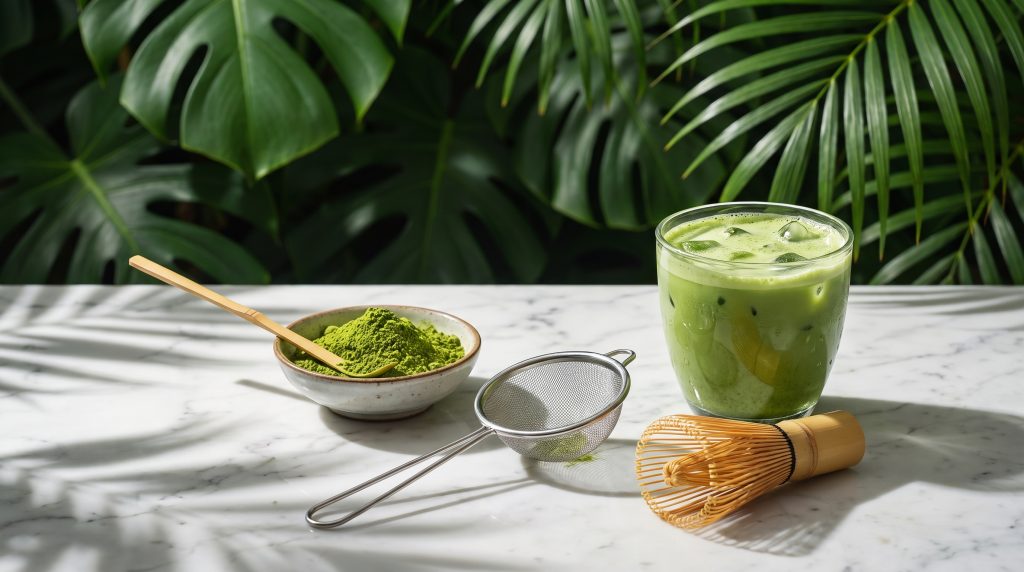
Matcha is powdered green tea made from shade-grown, stone-ground Camellia sinensis leaves. You whisk it whole into water or milk rather than steeping it. The best starting point for most beginners is a matcha latte with oat milk — approachable, flavourful, and a good introduction to what ceremonial-grade matcha actually tastes like before you try it straight.
Welcome to matcha. It is one of those ingredients that looks intimidating from the outside — the rituals, the grades, the Japanese vocabulary, the bamboo accessories — but is actually quite straightforward once someone explains the basics without the jargon. That is what this guide is here to do.
What is matcha, in plain terms?
Matcha is green tea, but made differently from what you will find in a teabag.
All tea comes from the same plant: Camellia sinensis. With regular green tea, you steep the leaves in hot water and discard them. With matcha, the leaves are shaded before harvest (to make them sweeter and more umami-rich), then stone-ground into an extremely fine powder. That powder is whisked directly into your water or milk, so you consume the whole leaf — not just what dissolves out of it.
The result is a drink that is more concentrated, more complex, and significantly greener than steeped green tea. It has a distinctive umami depth, a natural mild sweetness, and a velvety texture that takes some people by surprise on first sip.
For the full origin story, see our post on what matcha is made of.
Why do people love it?
People come to matcha for different reasons, and most of them end up staying for different ones too.
The energy: Matcha contains caffeine — about 38–70mg per 2g serving — but also L-theanine, an amino acid that some research suggests may moderate caffeine jitteriness and support a sense of calm alertness. A lot of matcha drinkers say it gives them focus without the spike-and-crash they get from coffee. That is the honest framing: some studies suggest this effect, though individual responses vary.
The ritual: There is something about the act of making matcha — the measuring, the sifting, the whisking — that functions as a small moment of attention in the morning. Whether you find that appealing or fussy is a personal question.
The colour: Ceremonial-grade matcha is a vivid, saturated green that photographs beautifully. That has driven a lot of social media interest, which has in turn driven a lot of people to try it for the first time. However they arrive at the cup, many stick around.
The flavour: Once you have had genuinely good matcha, it is hard to go back to not having it. The umami depth, the slight sweetness, the way it lingers — it is unlike anything else in the drinks world.
Where to start: your first matcha
If you are entirely new to matcha, a matcha latte with oat milk is the best starting point. Here is why:
- Straight matcha (whisked into water with nothing else) is intense and can feel unfamiliar on a first encounter if you are not used to umami-forward drinks
- A latte softens the intensity, lets the milk’s natural sweetness balance the flavour, and gives you a reference point to explore from
- Oat milk in particular complements matcha exceptionally well — its creaminess and subtle sweetness sit very naturally alongside the green, earthy notes
Start there. Once you enjoy it, try an unsweetened version. Then, when you are ready, try a small amount whisked straight into water. Most people who reach that stage find themselves converted in a way that is hard to undo.
What to buy: ceremonial grade vs culinary grade
This is the single most important thing for a beginner to understand.
There are two broad categories of matcha:
Ceremonial grade is made from first-flush leaves — the youngest growth of the season — from plants that have been shaded for weeks before harvest. The colour is vivid green, the flavour is smooth and umami-rich with very little bitterness, and the texture is silky. This is what you want for drinking.
Culinary grade is made from later-harvest leaves. The colour is duller (more yellowy-green), the flavour is noticeably more bitter, and it is designed to be used as an ingredient in baking, smoothies, or cooking, where other flavours do the heavy lifting.
Many beginners drink culinary-grade matcha, find it harsh and bitter, and conclude they do not like matcha. They often just tried the wrong thing.
For drinking — at home or in a café — always look for ceremonial grade. Yes, it costs more. The difference in the cup justifies it.
Our post on ceremonial vs culinary matcha covers this in more detail.
Basic equipment for home preparation
You do not need much:
Bamboo whisk (chasen) — the traditional tool for whisking matcha into water. It has dozens of thin tines designed specifically for this purpose and produces the best foam and most even incorporation. Available online for £8–£15. One chasen lasts a long time if you rinse it immediately after use and dry it on a whisk holder.
Small fine-mesh sieve — matcha powder clumps easily, especially if it has been stored for a while. Sifting it into your cup before adding water removes lumps and helps the powder dissolve evenly. A tea strainer works fine.
Temperature-controlled kettle — or a standard kettle. Water for matcha should be around 80°C. Too hot and the bitterness intensifies sharply. If you do not have a temperature-controlled kettle, boil water and leave it to rest for two minutes — that gets you close enough.
That is genuinely all you need for a good matcha latte. A ceramic matcha bowl (chawan) is lovely if you get into the traditional preparation, but entirely optional.
Your first matcha at home: a simple method
- Sift 2g (roughly half a teaspoon) of ceremonial-grade matcha into a cup or small bowl.
- Add 40ml of water at 80°C and whisk briskly with a bamboo whisk (or electric milk frother) until smooth and slightly foamy — about 30–45 seconds.
- Add 150–200ml of heated oat milk. Stir gently.
- Optional: add a small drizzle of honey or agave if you would like a little sweetness.
- Drink immediately.
That is a matcha latte. Enjoy it.
For a more detailed version, see our full guide on how to drink matcha. If you do not have a bamboo whisk, see how to make matcha without one.
Common beginner mistakes
Using water that is too hot. This is the single most common cause of bitter matcha at home. 80°C, not boiling.
Buying culinary-grade matcha. As discussed above — get ceremonial grade for drinking.
Not sifting. Un-sifted matcha produces a lumpy drink. Thirty seconds with a small sieve makes a real difference.
Adding milk before whisking. Always whisk the matcha into a small amount of hot water first. Milk makes it harder to dissolve the powder properly.
Expecting it to taste like green tea. It does not. It is more concentrated, more complex, and has a texture that steeped tea does not. Give yourself a few cups before forming a strong opinion.
Hot vs iced: which should you try first?
Both are excellent. Hot matcha latte is warming and more aromatic — you notice the grassy, umami notes more clearly. Iced matcha latte is brighter, slightly milder in flavour, and very refreshing.
If you are in summer or find hot drinks leave you less enthused, start with iced. The preparation is almost identical — whisk the matcha into a small amount of hot water first, then pour over ice and add cold oat milk.
What to order at a café
When visiting a café that serves matcha:
- Ask for a matcha latte to start. Specify oat milk if that is your preference.
- If they offer ceremonial grade, that is a good sign.
- You can ask for it unsweetened if you want to taste the matcha clearly; ask for honey or syrup on the side if you want the option.
- Once you know you like it, try a straight matcha (whisked with water only) — typically listed as matcha tea or traditional matcha.
When we open at Framberry in London in 2027, our matcha menu will include everything from straight ceremonial matcha to strawberry matcha, iced matcha, and oat matcha. Join our interest list to hear when we are ready.
How much matcha per day?
One to two servings of 2g each is a sensible amount for most healthy adults. See our post on how much matcha per day for the full picture, including the NHS caffeine guidance.
Frequently asked questions
I have never liked green tea — will I like matcha?
Quite possibly. Matcha and steeped green tea are related but noticeably different. Matcha is more concentrated, has a distinctive umami quality, and — at ceremonial grade — is considerably smoother and less bitter than most green tea bags. Give ceremonial-grade matcha a try before deciding the whole category is not for you.
What is the best matcha for beginners?
Ceremonial-grade Japanese matcha from a reputable supplier. Look for a vibrant green colour, a price point above about £10 for 30g (lower than that is usually culinary grade), and ideally a specific growing region mentioned on the packaging (Uji, Nishio).
Can I just add matcha powder to cold milk without whisking?
You can, but it will clump. Matcha powder does not dissolve easily in cold liquid — whisking it into a small amount of hot water first is important. After that, you can add cold milk and ice.
How long does a tin of matcha last?
Opened, matcha is best used within one to two months. The flavour and colour degrade over time — not quickly enough to be noticeable week to week, but by the three-to-four month mark you will notice the vibrancy fading. Store it in an airtight container away from light and moisture. Full details in our guide on how to store matcha.
Is matcha safe every day?
For most healthy adults, yes — one to two servings per day is considered reasonable. Keep total caffeine in mind if you are also drinking coffee or tea. If you are pregnant, check NHS guidance on caffeine limits (200mg per day).
When we open in London in 2027, our job will be making matcha approachable for people who have never had it and excellent for people who already love it. Join the interest list to be the first to visit.