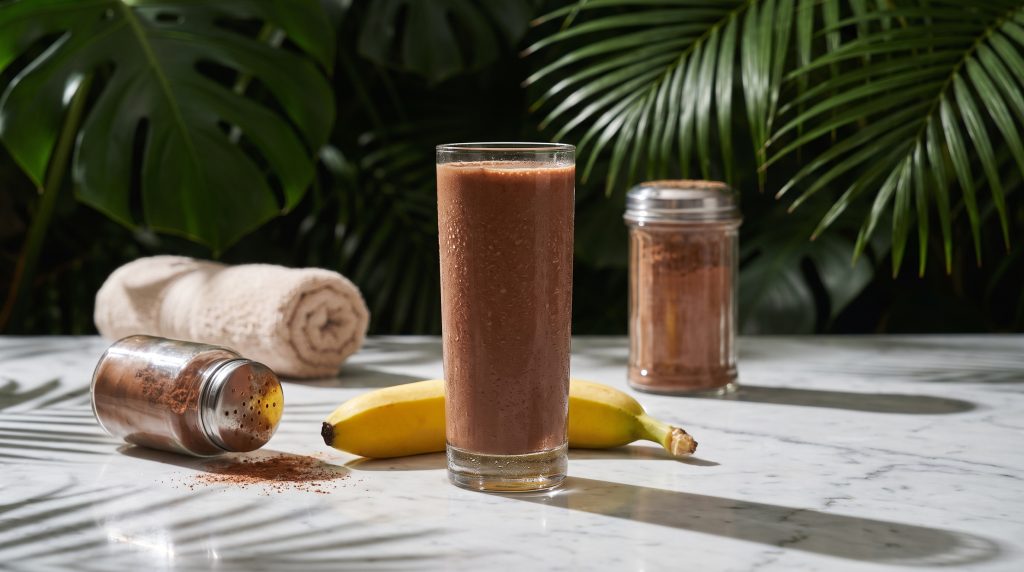
A good post-workout smoothie does three things: it starts rehydrating you, it gives your muscles the protein they need to repair, and it replenishes the carbohydrates you’ve used up. This one does all three, takes five minutes to make, and actually tastes like something you want to drink — not a supplement.
Why post-workout nutrition matters
After any meaningful exercise session, your body is in a state of repair. Glycogen stores are depleted; muscle tissue has microscopic damage that will be rebuilt stronger; you’ve lost fluid through sweat. Research suggests that consuming a combination of protein (around 20–40g) and carbohydrates in the couple of hours after exercise may support recovery — both muscle repair and energy restoration.
A banana-and-protein smoothie happens to cover all of this in a single, blendable package.
The Framberry recovery smoothie
Prep time: 5 minutes
Total time: 5 minutes
Serves: 1
Ingredients
- 1 large banana (frozen is ideal — makes it thick and cold without watering it down)
- 150ml oat milk
- 1 scoop vanilla protein powder (~25g protein — whey or plant-based both work)
- 1 tablespoon peanut butter or almond butter
- 1 tablespoon chia seeds
- Handful of ice (only if using a fresh banana rather than frozen)
Steps
- Add the banana and oat milk to the blender first — this helps everything blend more evenly.
- Add the protein powder, peanut butter and chia seeds.
- If using a fresh banana rather than a frozen one, add a handful of ice.
- Blend on high until completely smooth — about 30–45 seconds.
- Pour immediately and drink within 30–60 minutes of finishing your workout.
Nutrition (approximate)
| Per serving | |
|---|---|
| Calories | ~400 kcal |
| Carbohydrates | ~45g |
| Protein | ~30g |
| Fat | ~12g |
| Fibre | ~6g |
Nutrition varies depending on the protein powder and nut butter used.
Why this recipe works
Banana provides fast-releasing carbohydrates that begin replenishing glycogen quickly. It’s also a natural source of potassium, one of the key electrolytes lost during exercise. Frozen banana gives the smoothie a thick, milkshake-like texture without diluting it with ice.
Oat milk contributes carbohydrates and a small amount of protein (typically 1–2g per 100ml), with a naturally sweet, creamy flavour. It keeps the smoothie dairy-free by default.
Protein powder is the muscle-recovery anchor — aim for roughly 25g of protein per scoop. Vanilla works well with banana; unflavoured also works. Plant-based protein (pea or hemp-based) makes the whole smoothie vegan.
Peanut or almond butter adds a small additional protein boost, healthy fats that slow digestion and moderate blood sugar, and genuine flavour richness.
Chia seeds bring omega-3 fatty acids, additional fibre, and a small protein contribution. They also thicken the smoothie slightly as they absorb moisture.
Variations
Add a handful of spinach — it blends invisibly into a banana smoothie and adds iron, folate and magnesium without changing the flavour noticeably.
Swap oat milk for coconut water — reduces the calories slightly, increases the electrolyte content (especially potassium). Good for post-run recovery on a hot day.
Add frozen mango — replace half the banana with frozen mango for a tropical variation. Slightly lower calorie, still plenty of carbohydrate.
Use coconut oil instead of nut butter — medium-chain triglycerides (MCTs) from coconut oil may support energy metabolism; the evidence is mixed but it’s a popular choice. Slightly different texture.
Add a superfood booster — a teaspoon of maca, a pinch of cacao or a scoop of spirulina can be added if you’re interested in adaptogens or extra micronutrients. These won’t change the fundamental recovery equation, but they add variety.
Framberry’s protein smoothies
This recipe is the home version of what we’ll be making at Framberry when we open in London in 2027. Our smoothies are built on the same principle — real fruit, real ingredients, protein boosts available as standard — with oat milk as the default and every menu option vegan-friendly.
For the full menu, see smoothies when we launch. In the meantime, the smoothies guide covers everything you need to know about making great smoothies at home.
And if you want to understand the broader picture of recovery drinks — not just smoothies — see our guide to the best post-workout drinks and what to drink after a run.
Join the list to hear when Framberry opens.
Frequently asked questions
Can I make this smoothie the night before?
You can blend it and refrigerate it overnight, though chia seeds will thicken it considerably. Give it a good shake or stir in the morning and add a splash of oat milk if needed. It’s best fresh, but the night-before method works fine for convenience.
What protein powder works best?
Whatever you enjoy — consistency matters more than the specific source. Whey protein has the most complete amino acid profile and is fast-absorbing; pea protein is the most common plant-based option and works very well. Avoid protein powders with a very long ingredient list or heavy artificial sweeteners if you’re blending fruit.
Is this smoothie suitable for vegans?
Use plant-based protein powder (pea, hemp or brown rice) and the recipe is fully vegan. Oat milk is already vegan; peanut and almond butter are also vegan. No animal products required.
Can I have this smoothie even if I haven’t worked out?
Absolutely. It’s a balanced, nutritious meal or snack regardless of whether you’ve exercised. The protein and carb content make it filling and sustaining. Just bear in mind it’s reasonably calorie-dense (~400 kcal) — if you’re having it as a snack rather than a meal, adjust the portions accordingly.
Does the timing of a post-workout smoothie matter?
The oft-cited “30-minute anabolic window” is somewhat overstated — research suggests you have a couple of hours after exercise to consume protein and still support recovery effectively. That said, drinking it within an hour is a sensible habit, and starting to rehydrate immediately is always the right call.
Framberry opens in London in 2027. Our recovery smoothies are built on exactly this formula — real fruit, plant-based protein, oat milk — made to order. Join the list to be first to know.