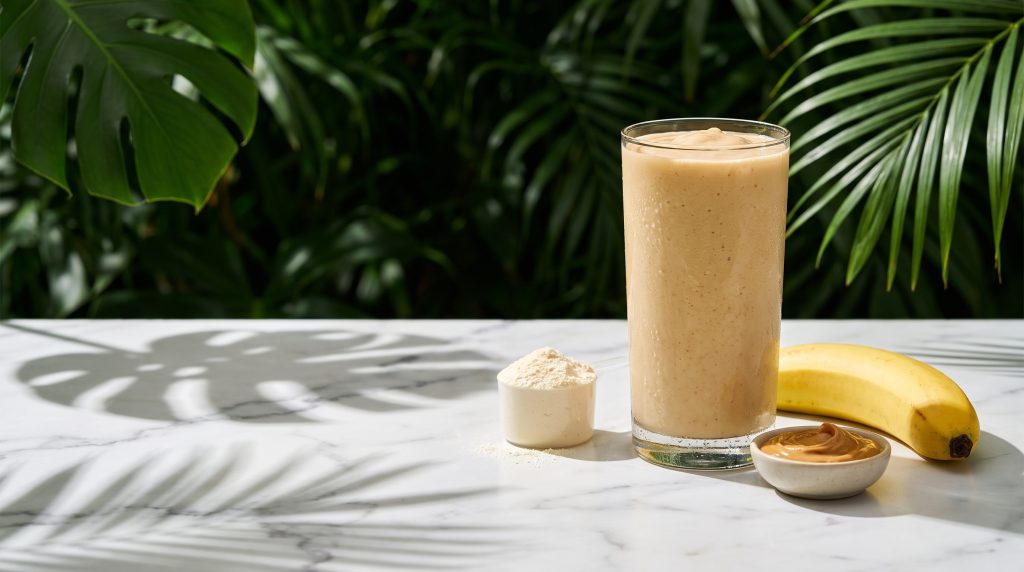
A good protein smoothie delivers 20–30g of protein alongside real fruit — without tasting like a chalky supplement shake. The trick is choosing the right protein source for your base, balancing it with fat and fibre, and not overdoing the portions. Here’s everything you need to know, plus five recipes worth making.
Why add protein to a smoothie?
A standard fruit smoothie — banana, mango, oat milk, done — is a perfectly decent drink. But protein is what transforms it from a fruity snack into something that earns its place as a meal. Protein slows digestion, which means blood sugar rises more gradually and you stay full longer. It also provides the amino acids your muscles use for repair and maintenance.
Most adults in the UK need roughly 0.75g of protein per kilogram of body weight per day, according to the British Nutrition Foundation. If you’re active, that figure edges higher. A smoothie can make a meaningful contribution — if you build it right.
Types of protein you can blend
Not all protein sources behave the same way in a blender, and they don’t all taste the same either. Here’s a quick rundown of what works well.
Pea protein powder
Pea protein is the most popular plant-based option in a smoothie context, and for good reason. It blends smoothly, has a neutral flavour (particularly vanilla-flavoured varieties), and typically provides around 20–22g of protein per 30g serving. It’s vegan, halal-friendly, and kosher-friendly. The main thing to watch is texture: start with less liquid than you think you need, then adjust — pea protein can make a smoothie thicker than expected.
Hemp protein powder
Hemp protein is slightly earthier than pea and provides roughly 10–15g of protein per 30g serving, making it less protein-dense but also easier to hide in green smoothies where a little nuttiness suits the flavour. It also brings omega-3 fatty acids and fibre to the blend.
Whey protein
For those who eat dairy, whey is the classic post-workout choice — fast-absorbing, high in leucine, and available in a huge range of flavours. Around 25g protein per 30g serving is typical. It blends easily and gives smoothies a creamy texture. Not suitable for vegans or those avoiding dairy.
Greek yoghurt
Plain Greek yoghurt gives you roughly 10g of protein per 100g, plus calcium and probiotics, and adds a pleasant creaminess and mild tang. It works especially well in berry or tropical smoothies. Use the full-fat variety for a richer result — it blends more smoothly than low-fat.
Nut butter
Almond butter and peanut butter each contribute around 7–8g of protein per 30g, alongside healthy fats and flavour. Nut butter alone won’t push a smoothie to 25g protein, but it’s an excellent supporting act alongside a protein powder. It also helps with satiety in a way that protein powder alone doesn’t quite manage.
Silken tofu
Often overlooked, silken tofu is a surprisingly effective smoothie ingredient. It adds creaminess, very little flavour of its own, and around 6–8g of protein per 100g. It works particularly well in vanilla or banana-based blends. We cover it in more detail in our vegan protein smoothie guide.
How much protein per smoothie?
If you’re making a post-workout recovery drink, the British Dietetic Association and British Nutrition Foundation guidance suggests 20–40g of protein within a couple of hours of exercise may support muscle repair. Twenty to thirty grams is a realistic and practical target for a smoothie.
If you’re just looking to make a smoothie more filling — as a breakfast or afternoon snack — even 10–15g makes a noticeable difference to how long you stay satisfied.
One note: more is not always better. Very high protein intakes in a single sitting (well above 40g) don’t offer additional benefits for muscle protein synthesis, and consistently very high protein diets should be discussed with a healthcare professional if you have any underlying conditions.
Five protein smoothie recipes
1. Classic vanilla protein smoothie
The workhorse. Banana provides quick carbohydrates and natural sweetness; almond butter adds fat and depth; vanilla protein ties it together.
Recipe card
– Prep: 5 min / Total: 5 min / Serves: 1
– Ingredients: 1 medium banana (fresh or frozen), 1 scoop (30g) vanilla pea protein powder, 250ml oat milk, 1 tbsp almond butter, small pinch of cinnamon (optional)
– Steps:
1. Add all ingredients to a blender.
2. Blend on high for 45 seconds until completely smooth.
3. Taste — add a little more almond butter if you want a richer flavour.
4. Serve immediately.
– Nutrition (approx): ~380 kcal, 42g carbs, 26g protein, 11g fat, 4g fibre
2. Chocolate peanut butter protein smoothie
For anyone who has ever looked at a peanut butter cup and thought it should be in a blender.
Recipe card
– Prep: 5 min / Total: 5 min / Serves: 1
– Ingredients: 1 medium banana (frozen works best), 1 tbsp cocoa powder, 1 tbsp peanut butter, 1 scoop (30g) chocolate protein powder, 250ml oat milk
– Steps:
1. Add banana and oat milk to blender first.
2. Add cocoa, peanut butter and protein powder.
3. Blend on high for 45–60 seconds.
4. If too thick, add a splash more milk.
5. Serve over ice for a thicker, colder result.
– Nutrition (approx): ~420 kcal, 46g carbs, 28g protein, 12g fat, 5g fibre
3. Berry protein smoothie
Lighter in flavour than the banana-forward recipes, this one relies on frozen berries for a natural tartness that balances the protein powder well.
Recipe card
– Prep: 5 min / Total: 5 min / Serves: 1
– Ingredients: 150g frozen mixed berries (strawberry, raspberry, blueberry), 1 scoop (30g) vanilla pea protein, 200ml coconut milk (from a carton, not tin), 1 tbsp chia seeds
– Steps:
1. Add berries, coconut milk and protein powder to blender.
2. Add chia seeds.
3. Blend on high for 60 seconds — frozen berries need a little longer.
4. Serve immediately; the chia will thicken the smoothie if left to stand.
– Nutrition (approx): ~310 kcal, 32g carbs, 24g protein, 8g fat, 7g fibre
For more on blueberry smoothies specifically, see our blueberry smoothie recipe.
4. Mango and coconut protein smoothie
Tropical, creamy, and deceptively simple. Mango is sweet enough that you don’t need any added sweetener.
Recipe card
– Prep: 5 min / Total: 5 min / Serves: 1
– Ingredients: 200g frozen mango chunks, 200ml coconut milk (from a carton), 1 scoop (30g) vanilla protein powder, juice of ½ lime
– Steps:
1. Add mango, coconut milk and protein powder to blender.
2. Add lime juice.
3. Blend on high for 60 seconds until very smooth.
4. Pour over ice and serve.
– Nutrition (approx): ~330 kcal, 45g carbs, 23g protein, 6g fat, 4g fibre
See also: our mango smoothie guide for more tropical variations.
5. Green protein smoothie
Spinach turns this a vivid green, but the flavour is banana-forward — the spinach is almost imperceptible. A good option for anyone who wants the nutritional contribution of leafy greens without, well, tasting them.
Recipe card
– Prep: 5 min / Total: 5 min / Serves: 1
– Ingredients: 1 large handful baby spinach (~80g), 1 banana, 1 scoop (30g) vanilla pea protein, 250ml oat milk
– Steps:
1. Add spinach and oat milk to blender first — this ensures the greens are fully broken down.
2. Add banana and protein powder.
3. Blend on high for 60 seconds.
4. Serve immediately.
– Nutrition (approx): ~360 kcal, 44g carbs, 27g protein, 5g fat, 6g fibre
For a full breakdown of green smoothie techniques, see our green smoothie guide.
Tips for better protein smoothies
Blend in the right order. Liquid and greens go in first, then fruit, then protein powder last. Protein powder added to a dry blender can clump.
Frozen fruit beats fresh. It thickens the smoothie and means you don’t need to add as much ice, which dilutes flavour.
Don’t overdo the protein powder. One scoop per smoothie is enough. Two scoops doesn’t make it twice as effective for muscle protein synthesis, and the flavour suffers.
Taste before you add sweetener. Ripe banana and mango provide plenty of natural sweetness. Most protein powders are sweetened. You almost certainly don’t need to add anything extra.
Framberry’s protein smoothies
At Framberry, every smoothie on our menu can be customised with a protein booster — pea protein or hemp protein, added to any base. That means you can combine your favourite fruit blend with an extra 20g+ of protein without committing to a pre-designed recipe.
We’re opening in London in 2027. If you’d like to be among the first through the door, join the list.
Frequently asked questions
How much protein should a protein smoothie have?
For a post-workout smoothie, aiming for 20–30g of protein is a reasonable target based on BDA and BNF guidance on muscle protein synthesis. For a general breakfast or snack smoothie, even 10–15g makes a meaningful difference to satiety.
Is pea protein good in smoothies?
Yes — pea protein is one of the most smoothie-friendly protein powders. It blends well, has a mild flavour (especially vanilla varieties), and provides around 20–22g of protein per 30g serving. It’s also vegan, halal-friendly, and kosher-friendly.
Can I make a protein smoothie without powder?
Yes. Greek yoghurt (10g per 100g), nut butter (7–8g per 30g), silken tofu (6–8g per 100g), and hemp seeds all add protein without powder. You’re unlikely to reach 25g without powder unless you combine several of these, but a useful 10–15g is achievable.
When is the best time to have a protein smoothie?
Post-workout is the classic window — BDA guidance suggests consuming protein within a couple of hours of exercise to support muscle repair. But a protein smoothie also makes an excellent breakfast: the protein and fat slow digestion and help you stay full through the morning.
Do protein smoothies help with weight loss?
Protein is the most satiating macronutrient, which may help reduce overall calorie intake throughout the day. That said, protein smoothies aren’t a magic solution — overall diet, activity levels, and sleep matter too. We’d rather be honest about that than oversell it.
Want to try a Framberry protein smoothie? We’re building London’s wellness clubhouse and opening in 2027. Get early access via our smoothies menu or join the list.