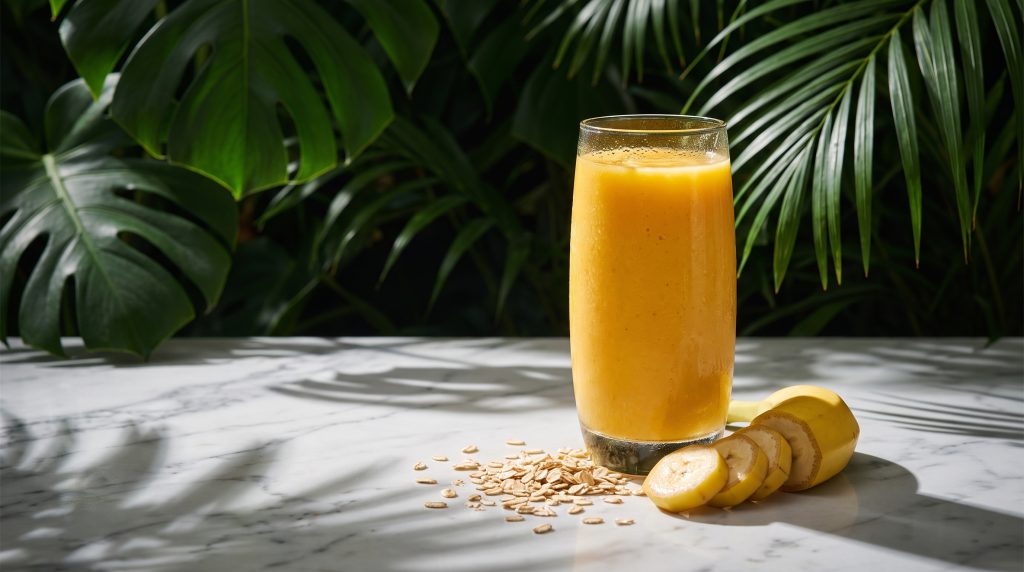
The best pre-workout drink depends on what you’re asking of it: a caffeine hit, quick fuel, or steady energy without the jitters. Matcha and black coffee cover the caffeine angle; a banana smoothie handles carbohydrates; water and coconut water handle hydration. Here’s how to choose — and when to drink it.
What makes a good pre-workout drink?
Before getting into specific drinks, it’s worth being clear about what a pre-workout drink is actually for. There are broadly three things exercise demands:
Energy — particularly for moderate-to-high intensity cardio or strength training, where your muscles primarily burn carbohydrates (stored as glycogen). If your glycogen stores are low going into a session, you’ll feel it.
Hydration — even mild dehydration can impair performance, concentration and coordination. The goal isn’t to down a litre before training; it’s to arrive already well-hydrated.
Alertness — caffeine is the most widely studied legal ergogenic aid. It’s well-established that caffeine can improve focus, endurance, and the perception of effort (making hard things feel slightly less hard). The European Food Safety Authority has confirmed that 3mg of caffeine per kilogram of body weight, consumed roughly an hour before exercise, is associated with improved endurance performance.
Not every pre-workout drink addresses all three — and not every workout demands all three. A gentle yoga session or a 30-minute walk doesn’t need carb-loading and a double espresso. A two-hour football match probably does.
Timing: when to drink what
Timing matters more than most people realise. Here’s a simple framework:
1–2 hours before training: This is the window for a smoothie, a light snack, or a larger meal if you’ve timed things well. Your body has time to begin digesting and converting carbohydrates into accessible fuel. A banana smoothie, a bowl of porridge, or a slice of toast with nut butter all work well here.
30–45 minutes before: Caffeine hits its peak plasma concentration roughly 45–60 minutes after consumption, so this is the window for coffee, matcha, or a caffeinated drink. Solid food at this point is inadvisable — it sits in your stomach and can cause discomfort during training. Keep it liquid.
Right before or during: Water and electrolytes. If your session exceeds 60–90 minutes, coconut water or a diluted electrolyte drink may help maintain hydration and replace sodium and potassium lost through sweat.
The best pre-workout drinks, ranked
1. Matcha latte — the calm caffeine option
Matcha contains roughly 38–70mg of caffeine per serving (compared to ~80–100mg in a standard espresso), alongside L-theanine, an amino acid that some research suggests may promote a state of calm alertness — focus without the spike-and-crash that straight caffeine can produce. This makes it a popular choice for training sessions where precision matters: yoga, pilates, bouldering, or anything requiring technical concentration.
Drink it 30–45 minutes before your session. A latte with oat milk adds a small amount of carbohydrate; a straight ceremonial matcha keeps it lighter.
For a full breakdown of matcha’s properties, see our matcha guide.
2. Black coffee — the fast, simple option
No frills, no L-theanine buffering, just caffeine. If you know your system handles coffee well, a black coffee 30–45 minutes before a high-intensity session is one of the most effective and evidence-backed pre-workout drinks available. The research on caffeine and athletic performance is robust and consistent.
The downside: for some people, coffee on an empty stomach causes acid reflux or GI discomfort. If that’s you, matcha is a gentler alternative.
3. Banana smoothie — the fuel option
Bananas are among the best pre-workout foods because they deliver fast-digesting carbohydrates (fructose and glucose), potassium (an electrolyte), and a small amount of vitamin B6. Blended with oat milk, a banana smoothie is easy to drink, digests quickly, and sits lightly — making it a good choice 1–2 hours before training.
It doesn’t provide caffeine, so it’s the right call when you’re not looking for a stimulant — perhaps for a morning run when you’ve already had coffee, or an evening session when you don’t want caffeine keeping you awake.
See our banana smoothie guide for further recipe ideas.
4. Coconut water
Coconut water is a naturally occurring source of electrolytes — particularly potassium — and modest carbohydrates. It’s not going to give you a caffeine hit or significant fuel, but for sessions in warm conditions or anyone who tends to sweat heavily, it’s a practical hydration choice. It’s lighter than a smoothie and gentler than a caffeinated drink.
5. Water
Underrated, free, and effective. Most people arrive at the gym mildly dehydrated because they haven’t drunk enough through the day. Getting your baseline hydration right — starting the day with a glass of water and maintaining it through to your session — will do more for your performance than any pre-workout supplement. If you’re well-hydrated, plain water before training is all most sessions actually need.
What to avoid before a workout
Large meals within 90 minutes of training — digestion draws blood to the gut; exercise draws it to the muscles. Combining the two leads to discomfort.
Very high-sugar drinks — a can of energy drink or a heavily sweetened juice can cause a blood sugar spike followed by a dip partway through your session, leaving you feeling worse than when you started.
Alcohol — it impairs coordination, hydration, and recovery. Worth stating, even if it’s obvious.
Too much caffeine — more caffeine is not better past a point. High doses can cause jitteriness, elevated heart rate, and anxiety, none of which are conducive to a good workout.
The Framberry pre-workout smoothie recipe
This is our go-to: banana for fuel, a teaspoon of matcha for calm caffeine, oat milk as the base, and a small drizzle of honey if you want it sweeter. Drink it 45–60 minutes before training.
Recipe card — Pre-workout banana and matcha smoothie
– Prep: 5 min / Total: 5 min / Serves: 1
– Ingredients: 1 medium banana (fresh is fine here — frozen makes it thicker), 1 tsp matcha powder (ceremonial or culinary grade), 250ml oat milk, 1 tsp honey or agave (optional)
– Steps:
1. Add oat milk and matcha to blender. Blend briefly on low — this disperses the matcha evenly before you add other ingredients.
2. Add banana and honey if using.
3. Blend on high for 45 seconds.
4. Taste. Add more honey if you prefer it sweeter; the matcha will be slightly present but the banana dominates.
5. Drink 45–60 minutes before your session.
– Nutrition (approx): ~240 kcal, 48g carbs, 5g protein, 4g fat, 3g fibre
– Caffeine (approx): 38–70mg from matcha
For a deeper look at matcha before exercise, see our post on matcha as a pre-workout drink.
What does Framberry offer pre-workout?
We’re building Framberry as a space that works for you before and after a session — not just a treat destination. Our menu includes matcha lattes (hot and iced), a build-your-own smoothie bar, and speciality coffee. Pre-workout, post-workout, or just because it’s Tuesday morning and you need a moment — we’re here for all of it.
We’re opening in London in 2027. Join the list.
Frequently asked questions
What is the best pre-workout drink for running?
For a run of under 60 minutes, water and good baseline hydration are usually sufficient. For longer runs, a banana smoothie 1–2 hours before provides carbohydrate fuel; a coffee or matcha 30–45 minutes before adds a caffeine benefit if you tolerate it well.
Is matcha good before a workout?
Matcha provides roughly 38–70mg of caffeine per serving alongside L-theanine, which some research suggests may moderate the stimulant effect, producing calm alertness rather than a sharp spike. For sessions requiring focus — yoga, technical sports, pilates — it’s a sensible choice.
Can I have a protein smoothie before a workout?
You can, but carbohydrates are more important pre-workout than protein. Carbs are your primary fuel source during moderate-to-high intensity exercise. A protein-rich smoothie is better saved for the post-workout window. Pre-workout, prioritise a banana or fruit-forward smoothie.
How soon before a workout should I drink a smoothie?
Around 1–2 hours is ideal — enough time for the carbohydrates to be processed into accessible energy without the discomfort of a full stomach during exercise.
Is coconut water better than sports drinks before exercise?
Coconut water is a natural source of potassium and moderate carbohydrates, which makes it a solid hydration option. Commercial sports drinks tend to have higher sodium content, which may be more beneficial for very long or high-intensity sessions where you’re losing significant salt through sweat. For most gym sessions, coconut water is a perfectly good choice.
Framberry opens in London in 2027 — a smoothie bar and speciality coffee house designed around your lifestyle, not just a post-gym treat. Join the list and be first to know when we open.