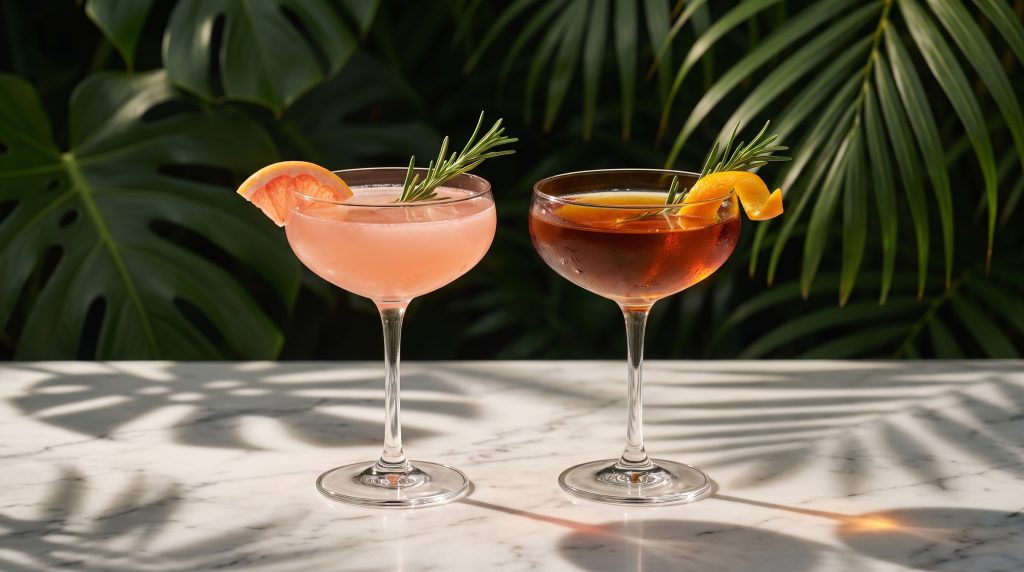
Mindful drinking doesn’t mean giving anything up. It doesn’t require a reason, a month, a label or a conversation about it. It just means paying attention to what you’re drinking — and choosing intentionally, whether that’s alcohol, something non-alcoholic, or a mix of both.
For a growing number of people in London and beyond, that shift in approach has quietly changed their relationship with social life for the better. Here’s what mindful drinking actually looks like in practice.
What mindful drinking means
The term borrows the “mindful” framing from meditation and wellness culture — but it’s really simpler than it sounds.
Mindful drinking means:
– Noticing why you’re reaching for a drink, not just that you are
– Choosing drinks you genuinely enjoy rather than defaulting out of habit
– Feeling equally comfortable with an alcoholic or a non-alcoholic drink in hand
– Not drinking out of social pressure or boredom
It doesn’t mean:
– Tracking units obsessively
– Abstaining entirely
– Explaining yourself to anyone
– Making anyone else feel bad about their choices
The mindful drinking movement isn’t anti-alcohol. It’s pro-intention. There’s a meaningful difference.
Why more Londoners are approaching it this way
Something has shifted in the past few years. It’s not that Londoners are becoming uniformly sober — though some are, and good for them. It’s more that the texture of social life has changed.
More people have a reason — or several — that means alcohol doesn’t always make sense:
- Running and fitness culture has grown enormously. Saturday morning park runs and Sunday long runs don’t mix especially well with a heavy Friday. The post-workout social is increasingly at a juice bar or coffee shop as much as a pub.
- Working from home means fewer structured “post-work drinks” occasions, and more agency over when and where you socialise.
- The halal community in London is substantial; so are pregnant women, people on medication, drivers, and those in recovery — all of whom want a social experience that doesn’t make them feel like an afterthought.
- The non-alcoholic drinks market has improved dramatically. It’s now possible to go to many restaurants, bars and events and have a genuinely interesting, well-crafted non-alcoholic option.
None of these things are anti-alcohol. They’re just the reasons that, at any given social gathering, a meaningful number of people are choosing something other than a drink that contains alcohol — and wanting that to be just as good an experience.
The social side: finding confidence in your choices
One of the things people rarely talk about when discussing mindful drinking is the social anxiety side of it. Ordering a non-alcoholic drink when everyone else is ordering wine can feel, in certain settings, like making a statement. It isn’t — but it can feel that way.
A few things that help:
Have a go-to drink
This is the single most useful practical tip. If you know what you’re going to order before you arrive, you don’t have to deliberate at the bar with six people waiting behind you. A matcha latte. A sparkling water with lime. A specific non-alcoholic beer you like. Something you genuinely enjoy and feel confident ordering.
Having a go-to drink is what confident drinkers and confident non-drinkers have in common: they know what they like.
Find venues that actually think about it
The gap between a pub with “J2O or Diet Coke” as the non-alcoholic option and a place that’s built a whole interesting menu around it is significant — not just in terms of what you drink, but how you feel while you’re there.
More London venues are taking this seriously. Dedicated non-alcoholic bars and bottle shops, wellness-focused cafes, and places like Framberry where the entire menu is non-alcoholic by design are increasingly common. When you know the venue gets it, the social anxiety largely evaporates.
You don’t owe anyone an explanation
Nobody asks a tea drinker why they chose tea. Nobody asks a water-drinker why they’re drinking water. Ordering a soft drink, a mocktail or a matcha shouldn’t require a medical note or a personal history. Most people — genuinely — are not thinking about what’s in your glass.
If someone does push (“aren’t you drinking?”), “I’m not in the mood tonight” or “I’m driving” or simply “I’ve got a matcha, cheers” is more than enough. You owe no further detail.
The best settings for mindful drinking in London
London has evolved meaningfully here.
Wellness-focused cafes and smoothie bars have become genuinely social spaces. Post-gym, post-run, post-yoga, a group of people sitting over matcha lattes and smoothies is now completely ordinary in most London neighbourhoods. The coffee shop has always been a social space; the wellness café is just extending that.
Non-alcoholic bottle shops and bars — there are now several in London dedicated entirely to alcohol-free drinks. These are worth knowing about as a sober-curious or mindfully drinking person; they take the guesswork out of the venue question entirely.
Restaurants in London are increasingly treating their non-alcoholic menus with seriousness. A thoughtful pairing of non-alcoholic drinks with food (a ginger kombucha with sushi, a cold brew with pasta, a fruit shrub with cheese) is a genuinely interesting alternative to wine pairing.
Framberry is being built as a social space for exactly this. Not a health food shop. Not an austere juice bar. A warm, convivial, community-feeling space — inspired by the run club, the yoga studio, the post-workout moment — where the drinks are genuinely excellent and the non-alcoholic menu isn’t an apology.
Opening in London in 2027. Join the list.
Drinks worth ordering
If you’re building a repertoire of drinks you genuinely enjoy:
Matcha latte — complex, slightly earthy, warming or iced, with a gentle caffeine hit and genuine flavour. One of the best options in a café or wellness bar.
Cold brew with oat milk — smooth, less acidic than hot coffee, very satisfying cold. Works as a long, leisurely drink.
Good mocktails — the best ones are genuinely brilliant. Shrubs, non-alcoholic spirits, fresh fruit and good presentation. Ask a bartender what they’re proud of.
Smoothies — not just a gym thing. A mango and coconut smoothie, a berry smoothie with lime, a banana and nut butter smoothie — these are enjoyable, social drinks. At Framberry, the menu is built around them.
Non-alcoholic beer or wine — the quality has genuinely improved. Athletic Brewing, Peroni Nastro Azzurro 0.0, and several non-alcoholic wines are now legitimately good options.
For more on the best non-alcoholic drinks to order in any setting, see our sober-curious drinks guide.
A note on what mindful drinking is not
It’s worth being clear about what this piece is not arguing:
It is not arguing that alcohol is bad, harmful, or that you should drink less of it. Many people drink happily and in a way that works well for their lives.
It is not a piece about sobriety, recovery or abstinence — though all of those are valid and sometimes powerful choices.
It is arguing that having a wider vocabulary for what you drink, and a bit more intention behind how you choose, makes social life richer and more interesting. And that the drinks available to non-drinkers, mindful drinkers, and occasionally-not-drinking people have never been better.
For more on the functional and wellness side of what you drink, see the wellness drinks guide.
Frequently asked questions
Is mindful drinking the same as not drinking?
No. Mindful drinking is about intention and awareness — it’s compatible with choosing alcohol, not choosing alcohol, or alternating. The point is that you’re choosing, rather than defaulting.
How do I handle social pressure to drink alcohol?
Most people won’t push back if you have something in your hand that you look happy with. A good non-alcoholic drink in a nice glass tends to neutralise the question before it arises. If someone does push, “I’m not in the mood” or “I’ve got this, cheers” is a perfectly complete answer.
Are there good non-alcoholic options in London pubs?
Increasingly yes. Non-alcoholic beers have improved dramatically, and most pubs now stock one or two decent options. For a more interesting experience, dedicated non-alcoholic bars and venues like Framberry (opening 2027) are worth seeking out.
Is mindful drinking just a wellness trend?
The language is relatively new; the behaviour isn’t. People have always had their own reasons for not drinking at particular times — pregnancy, medication, driving, religious practice, personal preference. What’s changed is that the drinks available to them have got much better, and the social stigma has reduced significantly.
Does Framberry serve alcohol?
No — the entire Framberry menu is non-alcoholic by design. It’s a deliberate choice to create a space where everyone — drinkers and non-drinkers alike — has genuinely excellent options, without anyone needing to explain themselves.
Framberry opens in London in 2027 — a social space built around great non-alcoholic drinks, good company, and no need to explain yourself. Join the list.