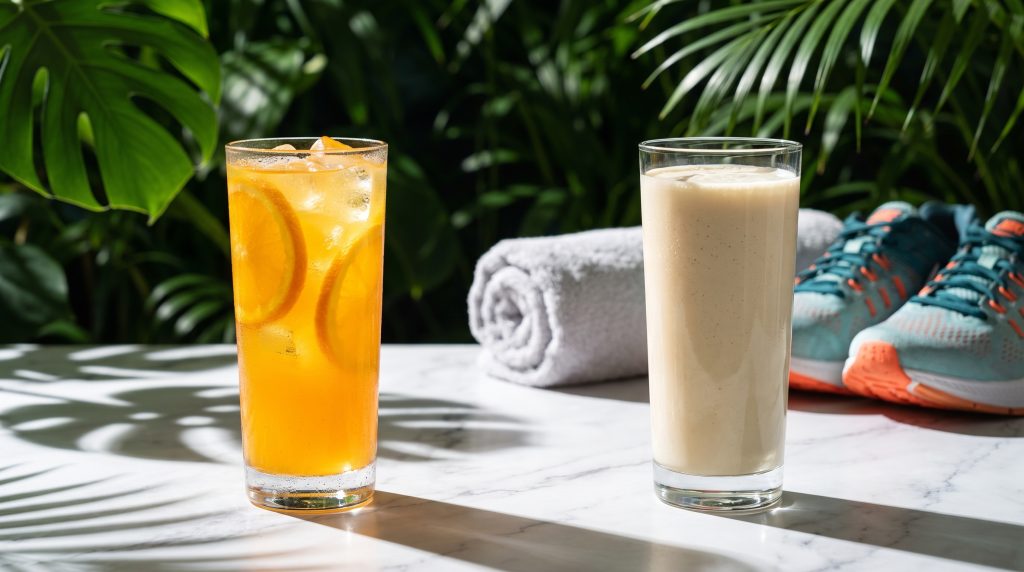
You’ve just finished a run. Your legs ache pleasantly, your kit is damp, and — let’s be honest — you’re starving and parched. What you reach for in the next hour matters more than most people realise. The right drinks can help you rehydrate, replenish energy stores and support muscle repair. The wrong choices (or nothing at all) can leave you sluggish for the rest of the day.
Here’s a clear, practical guide to what to drink after a run, in order of priority.
The three priorities after any run
Before we get into specific drinks, it helps to understand what your body actually needs:
- Rehydration — you’ve lost fluid through sweat; replacing it is the most urgent job.
- Carbohydrates — to replenish glycogen stores that power your muscles.
- Protein — to give your muscles the building blocks they need to repair.
Every drink on this list addresses at least one of these. The best choices address more than one.
Start with water — always
Water is the non-negotiable baseline. Before you reach for anything else, drink water. Even on a cold day, even after a short run, your body has lost fluid that needs replacing.
How much? The honest answer is: it depends. Your sweat rate, the temperature, how long you ran, and your individual biology all play a role. A useful rough guide from sports science is to weigh yourself before and after a run and drink approximately 1.5 litres of fluid for every kilogram lost. Most recreational runners won’t want to do that every session, and that’s fine — drink until you feel comfortable, and check your urine colour. Pale yellow is a decent indicator you’re on the right track.
The NHS recommends drinking more fluids in hot weather and when exercising. Don’t wait until you’re thirsty to start sipping — begin rehydrating as soon as you finish.
When do you actually need electrolytes?
Electrolyte drinks — those containing sodium, potassium, magnesium and calcium — are popular post-run, but they’re not always necessary. Here’s a sensible rule of thumb:
- Run under 60 minutes in cool conditions: plain water is almost certainly enough.
- Run over 60 minutes, or in hot or humid weather: electrolytes become genuinely useful.
When you sweat heavily, you lose sodium in particular. Replacing that sodium helps your body retain fluid more effectively and may reduce the risk of hyponatraemia (dangerously low sodium levels) if you’re drinking large volumes of plain water over a long event.
Natural sources of electrolytes include:
– Coconut water — a good source of potassium; modest sodium content
– A banana — potassium and carbs in one hit
– Sports drinks — effective but often high in added sugar; check the label
For most park runs and casual 5–10k outings, a glass of water and a banana is a perfectly sensible choice. Save the sports drinks for long runs, hot-weather training or race day.
Protein smoothies: muscle recovery in a glass
If you want to support muscle repair after a hard session, a protein smoothie is one of the most enjoyable ways to do it. Research suggests that consuming around 20–40g of protein in the couple of hours after exercise may support muscle protein synthesis — the process by which your muscles repair and adapt.
A simple recovery smoothie might contain:
– Banana — fast carbs to replenish glycogen; natural potassium
– Protein powder (whey or plant-based) — your main protein hit
– Oat milk — adds carbs and a creamy texture; dairy-free by default
– Peanut or almond butter — healthy fats and a small protein boost
– Chia seeds — omega-3s and a little extra protein
That combination ticks all three recovery boxes: rehydration (the liquid base), carbohydrates (banana, oat milk) and protein (powder, nut butter). See our Framberry recovery smoothie recipe for the exact build, or explore the smoothies menu when we open.
Matcha: calm energy after a long run
A post-run matcha latte might sound unusual, but there’s logic to it. Ceremonial-grade matcha contains roughly 38–70mg of caffeine per serving — less than a double espresso, more than green tea — combined with an amino acid called L-theanine. Some studies suggest that L-theanine may moderate the jitteriness sometimes associated with caffeine alone, supporting a steadier, more focused energy rather than a sharp spike.
After a long run, many people experience that peculiar combination of physical tiredness and mental restlessness. A matcha latte — made with oat or coconut milk — can provide gentle energy without the crash of a sugary drink, while the liquid itself contributes to rehydration. It’s not a recovery drink in the traditional sports-science sense, but as a warm, enjoyable post-run ritual, it’s hard to beat.
Explore the difference in our matcha vs coffee comparison or visit the matcha menu.
What about protein shakes?
A ready-mixed protein shake works well if convenience matters most. Look for one with at least 20g of protein per serving. Many commercial options are high in added sugar or artificial sweeteners, so check the ingredients list. A homemade smoothie typically gives you more control over what goes in.
What to avoid immediately after a run
A couple of things are worth holding off on, at least for the first half-hour:
- Very large volumes of plain water all at once — drinking an enormous amount of plain water very quickly, especially after a long run, may dilute sodium levels. Sip steadily rather than gulping several litres in one go.
- Very high-sugar drinks — a fizzy drink or juice with 40g of sugar will spike blood glucose quickly. A modest amount of carbohydrate is helpful; a sugar bomb less so.
- Alcohol — alcohol is a diuretic and will actively work against rehydration. If you’re heading for a post-run social, get a couple of glasses of water in first and consider a non-alcoholic option. More on that in our sober-curious drinks guide.
Timing: when should you drink?
- Immediately: start rehydrating with water as soon as you stop running.
- Within 30–60 minutes: if you’re having a protein smoothie, this window is a sensible target — though the importance of an exact post-workout window is sometimes overstated. If you can’t manage it immediately, don’t panic; protein eaten within a couple of hours still does the job.
- Throughout the day: continue drinking water steadily. One big drink post-run won’t fully replace everything you’ve lost.
Framberry’s post-run picks
We’re building Framberry as London’s post-workout clubhouse — the place your run club heads to after the Saturday morning 5k. Everything on the menu is non-alcoholic, oat and coconut milk are the defaults, and there’s a protein booster for every smoothie if you want it.
Our post-run recommendations when we open:
- A banana smoothie with protein boost — fast, filling, carbs and protein sorted
- A matcha latte with oat milk — calm energy and a moment to decompress
- A mango and coconut water smoothie — natural electrolytes, tropical flavour, and very refreshing cold
Opening in London in 2027 — join the list.
Frequently asked questions
Is it okay to drink coffee after a run?
Coffee is fine in moderation — it’s not going to undo your run. That said, caffeine is a mild diuretic, so pair it with water rather than letting it replace your rehydration. A matcha latte gives you similar caffeine with a gentler effect.
Can I drink a sports drink after every run?
You can, but for runs under an hour in normal temperatures it’s unlikely to offer benefits that water plus a snack doesn’t cover — and many sports drinks are high in sugar. Save them for long runs, hot weather or race days.
How long after a run should I eat or drink something?
Start sipping water immediately. If you’re having a recovery smoothie or snack, within the first 30–60 minutes is a reasonable target, though research suggests you have a couple of hours before the recovery window closes meaningfully.
Is coconut water better than plain water for rehydration?
Coconut water is a useful source of potassium and contains some natural electrolytes, but its sodium content is relatively low — which matters most after heavy sweating. For very long or intense runs, a dedicated electrolyte product may serve you better. For shorter runs, coconut water is a tasty and nutritious option.
What if I’m not hungry after a run?
Start with water or a light smoothie rather than forcing food. A liquid meal is often easier to stomach post-exercise when appetite is suppressed. Even a small banana with milk is enough to kickstart recovery if a full meal feels like too much.
Framberry opens in London in 2027. We’re building a post-run clubhouse where everyone’s welcome and every drink is non-alcoholic by design. Join the list to be first to know.