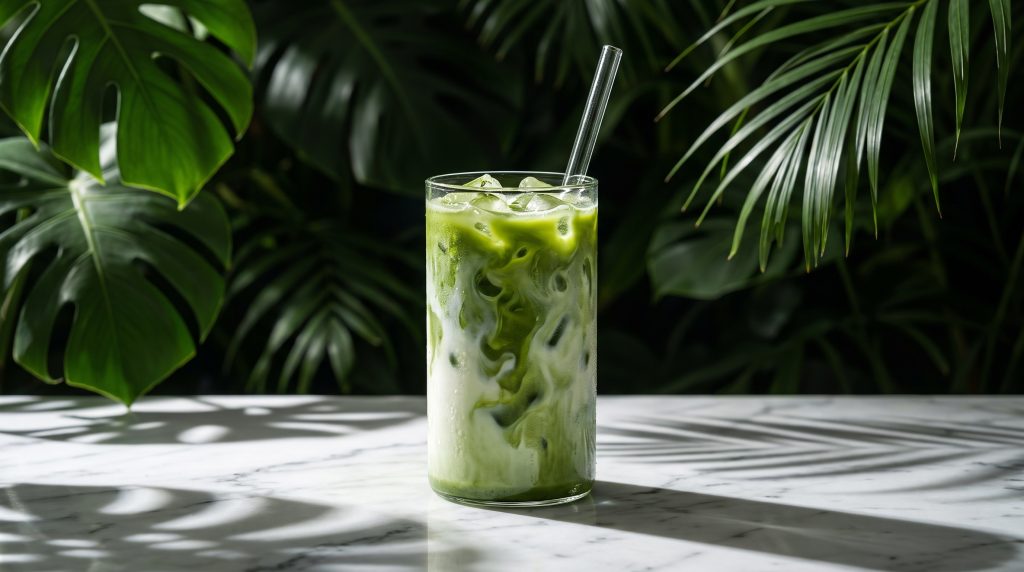
Iced matcha latte recipe: how to make it at home
An iced matcha latte is whisked ceremonial-grade matcha dissolved in a small amount of warm water, poured over cold milk and ice. It takes about five minutes, requires no special equipment, and the result is considerably better than most of what you can buy. The most important rule: never use boiling water.
What makes a good iced matcha latte?
There are really only two things that stand between an excellent iced matcha latte and a disappointing one: the quality of your matcha and the temperature of your water.
Good matcha is ceremonial grade — made from shade-grown, first-flush tea leaves ground into a fine powder. It dissolves cleanly, tastes sweet and vegetal rather than harsh, and has that deep, saturated green colour that makes an iced matcha look so appealing. Our matcha guide explains the grades in full.
The water temperature is where most home recipes go wrong. Boiling water (100°C) denatures some of the delicate compounds in matcha and releases harsh, bitter tannins. The sweet spot is around 75–80°C. If you do not have a temperature-controlled kettle, boil the water and leave it to cool for three to four minutes — that is usually enough.
The right milk
Cold oat milk is the best choice for an iced matcha latte. It has a gentle, natural sweetness that complements matcha without fighting it, and it pours beautifully over ice. Barista editions are formulated to stay stable when cold and can be lightly frothed if you want a silkier texture. Full-fat oat milk works perfectly well straight from the fridge.
Almond milk is a reasonable alternative — slightly thinner but clean in flavour. Coconut milk can overpower the matcha. Full-fat dairy works if you are not avoiding it, though the richness can mask the more subtle notes of a good ceremonial-grade matcha.
For a deep dive into why oat milk is the standard choice, see our post on oat milk matcha lattes.
How to get a perfectly smooth paste
The key step that many recipes skip is making a smooth paste before adding more liquid. Sift the matcha powder first — this breaks up any lumps that have formed. Then add only a tablespoon or so of your warm water and work it into a smooth paste before adding the rest of the 60ml. This two-stage approach gives you a far smoother, lump-free result.
A small electric frother works brilliantly here. If you do not have one, a small whisk in a vigorous W-motion achieves the same result. The goal is a smooth, slightly frothy concentrate — not a thick paste and not a watery solution.
Can you make iced matcha in advance?
The whisked matcha concentrate keeps well in the fridge for up to 24 hours in a lidded container. This makes it practical to batch-whisk in the morning and assemble drinks quickly throughout the day. The flavour and colour hold up well over that window. Beyond 24 hours, the matcha begins to oxidise and the colour dulls.
Do not pre-mix the matcha with the milk if you are storing it — keep the concentrate and the milk separate until you are ready to drink.
Framberry’s iced matcha
At Framberry we use unsweetened ceremonial-grade Japanese matcha as standard, with cold barista oat milk. You can find it on our iced drinks menu, alongside our strawberry matcha and other seasonal variations. We add sweetener on request — agave to keep things vegan.
— RECIPE CARD —
Recipe name: Iced matcha latte
Prep time: 5 minutes
Total time: 5 minutes
Servings: 1
Ingredients:
– 2g (1 tsp) ceremonial-grade matcha powder
– 60ml warm water (approximately 80°C — not boiling)
– 200ml oat milk (cold)
– ½ tsp agave syrup or honey (optional)
– Ice
Steps:
1. Sift the matcha powder into a small bowl or wide-bottomed cup to remove any lumps.
2. Add a splash of the warm water (about 1 tbsp) and work into a smooth paste using a small whisk or electric frother.
3. Add the remaining warm water and whisk vigorously in a W-motion until completely smooth and lightly frothy. The surface should have a very light foam.
4. Fill a glass generously with ice.
5. Pour the cold oat milk over the ice.
6. Pour the matcha concentrate gently over the milk. For a layered look, pour over the back of a spoon.
7. Add sweetener if using and stir gently, or drink through a straw.
Nutrition (approx per serving):
Calories: ~80 kcal | Carbohydrates: 10g | Protein: 3g | Fat: 2g
Vegan by default when made with oat milk and agave.
Frequently asked questions
Why does my matcha taste bitter?
The most likely cause is water that is too hot. Boiling water (100°C) makes matcha bitter. Use water at around 75–80°C — boil it, then leave it to cool for a few minutes. A lower-grade culinary matcha will also taste more bitter than ceremonial grade.
Do I need a bamboo whisk?
No. A small metal whisk or a handheld electric frother works perfectly. If you have neither, shake the matcha and water in a small lidded jar until smooth. Our post on how to make matcha without a whisk covers all the options.
How much caffeine is in an iced matcha latte?
A 2g serving of matcha contains approximately 38–70mg of caffeine, which is less than a standard shot of espresso (around 63mg). It also contains L-theanine, an amino acid that some research suggests may moderate the stimulant effect — for more on that, see our post on matcha and L-theanine.
Can I use sweetened matcha powder?
You can, but it gives you less control over the final sweetness. Unsweetened ceremonial-grade matcha lets you adjust to taste. Many commercial matcha powders — including those used by some coffee chains — have sugar pre-blended in, which means you cannot reduce the sweetness without reducing the matcha.
Can I make this with regular dairy milk?
Yes, cold full-fat milk works well. The flavour profile is richer and slightly less clean than oat milk, but it is a perfectly good iced matcha latte. Semi-skimmed milk is thinner and produces a slightly less satisfying result.
Framberry opens in London in 2027 — join the list and be first through the door.