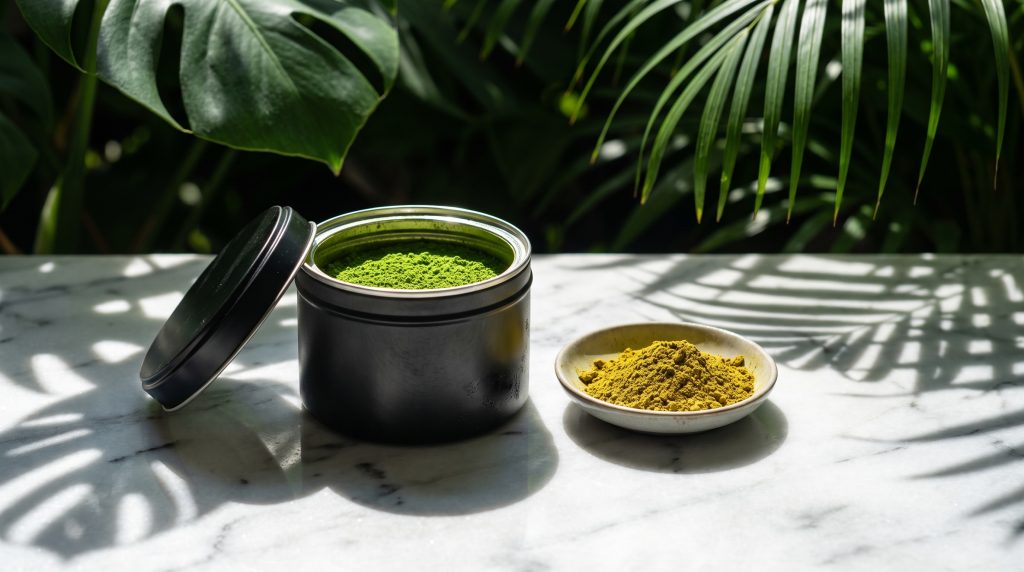
Store matcha in an airtight container in a cool, dark place, away from moisture and strong odours. Once opened, use it within one to two months for best flavour and colour. Matcha does not become unsafe as it ages, but the vivid green fades and the flavour goes flat — good matcha left too long tastes dull and disappointing.
Matcha is not a particularly fragile ingredient, but it does have a few specific enemies: oxygen, moisture, light, and heat. The good news is that protecting it from all four is straightforward, and a well-stored tin will stay in excellent condition for the entirety of its shelf life. Here is everything you need to know.
The right way to store matcha
Airtight container. Oxygen is the main enemy of matcha quality. Once a tin is opened, the matcha begins to oxidise slowly — which is what causes the vivid green to dull and the flavour to flatten. The original tin is usually well-designed for this purpose if it has a proper lid; if you decant it into something else, make sure it seals tightly.
Cool and dark. Light (especially direct sunlight) and heat both speed up oxidation and chlorophyll degradation. A kitchen cupboard away from the hob is ideal. A dark drawer works well. Avoid the windowsill or anywhere near the kettle.
Away from moisture. Matcha powder absorbs moisture readily, which causes it to clump and can promote microbial growth over time. Keep it away from sources of steam or condensation. Do not store it near the sink or in a bathroom cabinet.
Away from strong odours. Matcha is surprisingly good at absorbing smells from its environment, particularly if the container is not fully airtight. Coffee, spices, and other strong aromatics can subtly affect the flavour if they are stored close together.
The fridge: proceed with caution. Some people store matcha in the fridge to extend its life. This can work, but only if the container is truly airtight — condensation when you remove the tin and let it warm up can cause moisture problems. If you go this route, leave the tin to come to room temperature before opening it each time.
How long does matcha last?
Unopened: Most good-quality matcha has a best-before date of 12–24 months from production. Unopened, in its original packaging, stored correctly, it should remain in excellent condition up to that point.
Opened: Aim to use opened matcha within one to two months. The flavour and colour will degrade beyond this point — not dramatically from week to week, but noticeably by the three- or four-month mark.
This is one reason matcha is typically sold in small tins (30–40g) rather than large bags. A 30g tin at two 2g servings per day lasts about two weeks. At a more casual pace of a cup every couple of days, one to two months is a realistic timeframe.
How to tell if matcha has gone off
Matcha will not make you ill in the way that gone-off meat or dairy would. But it will taste significantly worse. Signs that your matcha is past its best:
- Colour has dulled — vivid bright green turning yellowy-brown or khaki is the most visible sign of oxidation
- Flat or stale flavour — the umami and natural sweetness fade; the drink tastes thin and unremarkable
- Musty or off smell — properly stored matcha smells fresh and grassy; a musty or dusty smell suggests it has been exposed to moisture or has simply aged out
- Heavy clumping — some clumping is normal and can be fixed with a sieve; dense, difficult-to-break clumps can indicate moisture has got in
Can you use old matcha?
Yes — with appropriate expectations. Matcha that is past its best as a drink often works perfectly well as a baking ingredient, where other flavours are doing the heavy lifting and the colour matters less. Matcha in a cake, smoothie, or sauce can still contribute flavour even when it would no longer make a satisfying cup.
If the matcha smells genuinely unpleasant (musty, rancid, or strongly off) rather than just flat, it is probably time to let it go.
Does matcha stain?
Yes. Matcha is one of the more stubborn food stains you are likely to encounter, for a straightforward reason: the vivid green colour comes from chlorophyll, which binds to fibres and surfaces readily and does not simply rinse away.
Stains on equipment
Whisk and bowls: Rinse immediately after use with cold or lukewarm water. Do not let matcha powder dry on a bamboo whisk — it is difficult to remove once set, and the tines are fragile. A quick rinse under running water immediately after use keeps your chasen clean.
Cups and mugs: Matcha can leave a green ring if left to dry. A quick rinse immediately after drinking usually prevents this. If you do get a ring, a paste of bicarbonate of soda and water applied gently with a cloth usually removes it.
Stains on fabric
This is where to act fast. Chlorophyll stains on fabric should be treated as follows:
- Act immediately — the sooner you treat the stain, the better the outcome
- Rinse with cold water — not hot; hot water can set the stain
- Apply washing-up liquid or a liquid laundry detergent directly to the stain and work it in gently
- Leave for 5–10 minutes, then rinse again with cold water
- Wash as normal according to the garment’s care instructions
- Do not tumble dry until the stain is fully out — heat sets stains permanently
For dried or set stains, an enzyme-based stain remover applied before washing gives the best results. White or light fabrics may benefit from a short soak in cold water with a small amount of oxygen-based bleach (following the product’s guidance), but test on an inconspicuous area first.
The honest summary: matcha stains, and a little care during preparation saves a lot of trouble. Wearing something you do not mind getting green on when you first try whisking is not bad advice.
Storing matcha at Framberry
At Framberry, our matcha is stored sealed and chilled until service, and turned over quickly enough that freshness is not a concern. When you order a matcha drink, you are getting powder at its best. We are opening in London in 2027 — join our interest list to hear when doors open.
For everything else, our matcha guide is your starting point, and our post on matcha for beginners covers the basics of what to buy and how to get started.
Frequently asked questions
Should matcha be kept in the fridge?
The fridge can extend matcha’s shelf life, but only works if the container is truly airtight — condensation on a cold tin being brought to room temperature can introduce moisture. A cool, dark cupboard is sufficient for one to two months of opened matcha. If you buy in larger quantities or want to keep it longer, the fridge is a reasonable option with a well-sealed container.
How do you know if matcha has gone bad?
Look for dulled colour (yellowy-brown rather than vivid green), flat or stale flavour, musty smell, or unusually dense clumping. None of these indicate the matcha is dangerous to consume, but the drink will taste noticeably worse.
How long does opened matcha last?
One to two months is the general guidance for optimal flavour and colour. The matcha does not become unsafe after this, but the quality degrades — it goes from something worth drinking to something you might as well use in baking.
Does matcha powder expire?
Yes, in the sense that it degrades in quality over time. Most tins have a best-before date. Consuming matcha beyond that date is unlikely to cause harm, but the flavour and colour will have deteriorated. Treat the best-before date as a quality guide rather than a strict safety deadline.
Why does matcha stain so badly?
Chlorophyll — the pigment that gives matcha its vivid green — is what causes the staining. It binds readily to fabric fibres and surfaces. The fix is speed: rinse immediately with cold water, treat with a detergent or stain remover, and avoid heat until the stain is out.
Fresh ceremonial-grade matcha makes all the difference. We are opening in London in 2027 — join the interest list and come and taste what properly stored, freshly prepared matcha actually tastes like.