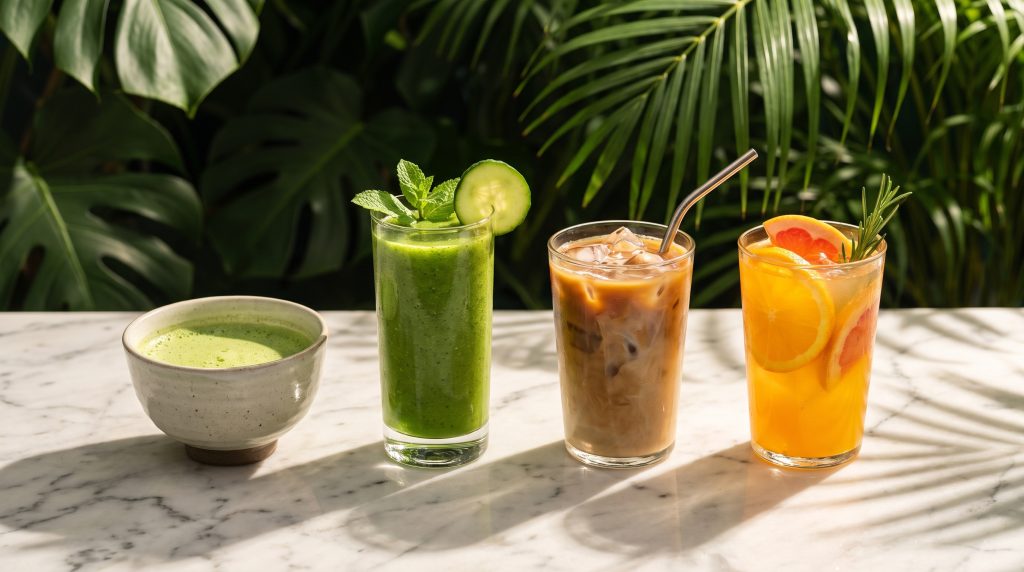
Most people know the feeling: a strong coffee at 9am, a surge of focus, then a brick wall around 2pm. Or a sugary drink that lifts you briefly and drops you hard an hour later. Energy crashes are real, they’re frustrating, and — good news — they’re largely predictable and avoidable once you understand what causes them.
Here’s a practical guide to the best drinks for sustained energy across the day, why certain choices lead to crashes, and how to time things sensibly.
Why energy crashes happen
Understanding the crash is the first step to avoiding it.
Blood sugar spikes
When you drink something high in sugar — a fizzy drink, a sweetened juice, an energy drink — glucose enters your bloodstream quickly, causing a rapid spike. Your body responds by releasing insulin to manage that spike, which can bring blood glucose down quickly — sometimes dropping it lower than it started. That’s the crash: the fatigue, brain fog and cravings that follow a sugar hit.
The solution isn’t to avoid carbohydrates entirely; it’s to choose sources where the energy arrives more gradually. Drinks with fibre (smoothies made with whole fruit), protein or fat alongside carbohydrate tend to slow that release.
Caffeine’s half-life
Caffeine has a half-life of roughly 5–6 hours in most adults. That means half of the caffeine in a 9am coffee is still active in your system at 2–3pm. The crash people associate with coffee isn’t usually caffeine “wearing off” dramatically — it’s more often a combination of adenosine (the tiredness signalling molecule that caffeine blocks) flooding back in, dehydration, and the mid-afternoon dip that’s a natural part of human circadian rhythm.
Drinking very large amounts of caffeine and then stopping contributes more to crashes than drinking less, more steadily, earlier in the day.
The best drinks for sustained energy
1. Matcha latte — the smooth energy option
Matcha is genuinely worth singling out here. A single serving of ceremonial-grade matcha contains roughly 38–70mg of caffeine — less than a double espresso (around 125mg), more than a cup of green tea. That moderate caffeine is paired with L-theanine, an amino acid that some research suggests may moderate the jitteriness sometimes associated with caffeine and support a more sustained, focused alertness.
The result, for many people, is a gentler energy arc than coffee — enough to feel alert and focused, without the sharp spike-and-drop. If you find standard coffee makes you anxious or causes an afternoon crash, matcha is worth trying.
A matcha latte with oat milk also provides some carbohydrate from the milk, which adds a small amount of sustained energy. It’s not a meal replacement, but it’s a drink that does more than just caffeine delivery.
Read more in our matcha vs coffee comparison or see is matcha good before a workout for its pre-exercise applications.
2. Water — the energy drink nobody promotes
Dehydration is one of the most common and most overlooked causes of low energy and poor concentration. Even mild dehydration — around 1–2% of body weight in fluid loss — has been associated with reduced cognitive performance and increased feelings of fatigue in research studies.
Before reaching for another caffeine hit, drink a large glass of water. Especially if you’ve been exercising, travelling, or sitting in a warm or air-conditioned room. The NHS recommends staying hydrated throughout the day and drinking more in warm weather and during exercise.
Water isn’t exciting, but it’s free, it works, and it’s the foundation that everything else builds on.
3. A protein smoothie — steady energy from food
A smoothie made with whole fruit, protein and a little fat is one of the best options for sustained energy, because it combines:
– Carbohydrates from fruit — available energy
– Protein — slows digestion, moderating the blood sugar curve
– Fat (from nut butter or seeds) — further slows energy release
The result is a gentle, sustained release of energy rather than a quick hit. A banana-protein smoothie in the morning can comfortably carry you through to lunch without the blood sugar rollercoaster.
See our protein smoothie guide and the recovery smoothie recipe for specific builds.
4. Black coffee or a flat white — useful if timed well
Coffee is fine. Caffeine is one of the most well-evidenced ergogenic and cognitive aids available. The issue is usually timing and quantity, not coffee itself.
Best practices for crash-free coffee:
– Drink it earlier in the day — ideally before noon. Caffeine consumed in the afternoon is more likely to disrupt sleep, which then causes the following day’s energy to suffer.
– Go for one or two drinks rather than several large ones. More caffeine doesn’t proportionally increase alertness, but does increase the likelihood of jitteriness and a bigger crash later.
– Pair it with a small snack rather than having it on an empty stomach if you’re sensitive to the effects.
Framberry’s coffee menu uses oat milk as the default — a gentler combination than black coffee for many people.
5. Green tea — steady, low-level caffeine
Green tea sits between matcha and standard tea in terms of caffeine content. It’s a reliable source of gentle caffeine (roughly 20–40mg per cup), with L-theanine present in smaller amounts than in matcha. For those who are caffeine-sensitive, green tea is a comfortable middle ground.
What to avoid if you want to avoid the crash
Sugary energy drinks
The mainstream energy drink market is dominated by products high in caffeine (often 80–160mg per can) and high in sugar, with other ingredients present in doses too small to have meaningful effects. The sugar-caffeine combination is effective at producing a short-term energy spike and a correspondingly sharp crash. There are better options.
Very sweet coffees and blended drinks
A large caramel blended coffee drink from a high-street chain can contain 40–70g of sugar. That’s an enormous blood sugar spike, with caffeine on top. The crash is essentially baked in.
Alcohol
Alcohol may feel like a source of energy — it’s a social lubricant and a relaxant — but it’s a central nervous system depressant that disrupts sleep quality even in small quantities. Poor sleep is one of the biggest contributors to low energy the following day. Choosing non-alcoholic options in the evening is one of the more effective things you can do for next-day energy. More on that in our sober-curious drinks guide.
Timing your drinks for all-day energy
Here’s a simple framework:
| Time | Best choice |
|---|---|
| Morning (7–9am) | Water first; then matcha latte or coffee + small breakfast |
| Mid-morning (10–11am) | Water; second matcha or coffee if needed |
| Lunch | Water; a protein smoothie if you’ve trained |
| Early afternoon (1–2pm) | Water; herbal tea; avoid adding more caffeine |
| Mid-afternoon (3pm+) | Water; decaf coffee or herbal tea |
| Evening | Herbal tea, non-caffeinated drinks |
The general principle: front-load caffeine into the morning when it’s most useful, stop by early afternoon to protect sleep, and stay hydrated throughout.
Framberry’s approach to all-day energy
We designed the Framberry menu around exactly this idea. Matcha is the centrepiece — a drink built for sustained, calm energy rather than a spike. Protein smoothies are built to fuel and sustain rather than to spike and crash. And nothing on the menu is alcoholic.
Whether you’re heading in for a morning session before work, a post-run ritual with your running club, or an afternoon boost that won’t wreck your evening, there’s something on the menu that serves the moment.
Opening in London in 2027 — join the list.
Frequently asked questions
Is matcha better than coffee for avoiding a crash?
Many people find the crash from matcha less pronounced than from coffee — the combination of moderate caffeine and L-theanine produces a gentler, more sustained effect for some. That said, individual responses vary. If standard coffee works well for you, there’s no need to switch. If you’re sensitive to caffeine or find coffee causes jitters and crashes, matcha is worth trying.
Why do I feel tired after drinking coffee?
A few possible reasons: caffeine has blocked adenosine receptors, and when the caffeine clears, adenosine floods back in (the “rebound” effect); you might also be mildly dehydrated; or you may be hitting a natural circadian dip that the coffee only briefly masked. Try drinking water alongside coffee and cutting off caffeine before midday.
Are there any drinks that genuinely give you more energy?
Caffeine genuinely increases alertness — that’s well-documented. Staying hydrated prevents the energy dip associated with dehydration. Protein and complex carbohydrates in a smoothie provide sustained energy as food. Beyond those, most “energy” marketing is doing more work than the ingredients.
Does drinking water actually improve energy levels?
Yes, if you’re mildly dehydrated. Research has found that even mild dehydration can impair mood and cognitive performance in some studies. If you’re already well-hydrated, drinking more water won’t supercharge your energy — but getting to well-hydrated from mildly dehydrated genuinely helps.
Can I drink matcha in the afternoon?
Its caffeine content (38–70mg) is relatively modest, so it’s less likely than a double espresso to disrupt sleep. That said, if you’re caffeine-sensitive, it’s worth having your last matcha before 2–3pm. Individual responses vary quite a bit.
Framberry opens in London in 2027. Matcha lattes, protein smoothies, and a menu built for people who want sustained energy rather than a spike. No alcohol, no added theatre. Join the list.