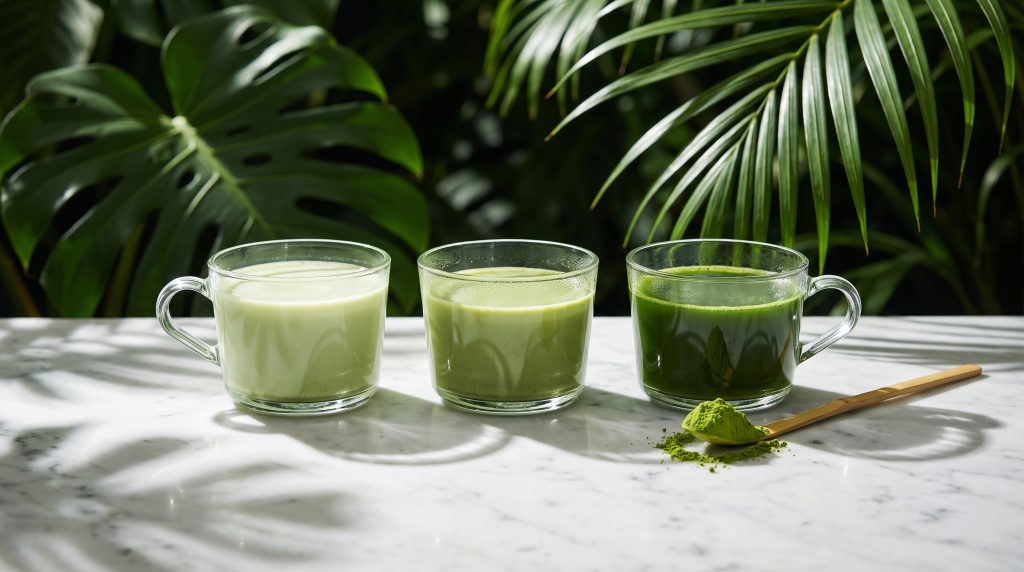
One to two servings of matcha per day — each containing around 2g of powder — is a sensible amount for most healthy adults. That gives you 76–140mg of caffeine, well within the level EFSA considers safe for most healthy adults — up to 400mg per day. If you are pregnant, the NHS advises the limit drops to 200mg per day from all sources, so factor matcha alongside any tea, coffee, or chocolate you consume.
Matcha is not something you would typically want to drink by the pint. A single 2g serving delivers more caffeine than a cup of green tea, and enough L-theanine and EGCG that more is not automatically better. The question is not really “how much can I drink” — it is “what is a sensible routine that works for your body and your day.”
Here is what the evidence and official guidance suggest.
The caffeine question: how much is in each serving?
A standard serving of matcha uses approximately 2g of powder. That delivers roughly 38–70mg of caffeine, depending on the grade, the specific batch, and how it is prepared.
For context:
– A cup of steeped green tea: approximately 20–45mg
– A standard shot of espresso: approximately 60–75mg
– A large filter coffee: approximately 100–200mg
EFSA considers up to 400mg of caffeine per day safe for most healthy adults from all sources. One or two servings of matcha sit comfortably within that ceiling. If you are also drinking coffee or tea, simply add the numbers together.
So how many cups is that in practice?
Two servings of matcha per day — one in the morning and perhaps one early afternoon — provides roughly 76–140mg of caffeine in total from matcha alone. Most people with a normal caffeine tolerance would find that perfectly comfortable.
One serving is also plenty for people who are more sensitive to caffeine or who are combining matcha with coffee in the same day.
There is no specific guidance from the NHS, EFSA, or BNF pinpointing a maximum number of matcha cups, because it is the total caffeine intake that matters. Use the 400mg per day ceiling as your reference and work backwards from what else you are drinking.
A note on EGCG at higher amounts
EGCG — the primary catechin antioxidant in matcha — is the compound most associated with potential health benefits. But the relationship between EGCG and benefit is not “more is always better.”
There is some evidence that very high intakes of EGCG, particularly from concentrated supplements rather than food, may have adverse effects in some people. This is not a concern at one or two daily servings of matcha — you would need to be consuming matcha in extreme quantities for this to be relevant. But it is a reason not to treat more as necessarily better.
Drink it because you enjoy it and because one or two cups fits your lifestyle, not because you are trying to maximise your EGCG intake.
If you are pregnant
The NHS recommends keeping caffeine below 200mg per day during pregnancy. One serving of matcha (38–70mg of caffeine) is well within that limit, but if you are also drinking tea, coffee, hot chocolate, or cola, those all count towards your total. Be mindful of the combined intake and check with your midwife or GP if you are unsure.
Very high doses of green tea catechins from supplements have been associated with liver-related concerns in some case reports, though these involve supplement doses far beyond normal dietary consumption. Drinking one cup of matcha per day as part of a varied diet is not the same thing.
When should you drink matcha?
Timing is where personal preference meets practical sense.
Morning is when most people find matcha works best. The caffeine provides alertness without the intensity of coffee, and many people find the L-theanine combination means they get into focused work more easily. On an empty stomach, matcha can occasionally cause mild nausea in people who are sensitive — if that is you, have it with or just after food.
Before exercise suits many people for the same reason: enough caffeine for energy, but without the jitteriness some get from pre-workout coffee.
After 2–3pm is where matcha caffeine can start to interfere with sleep, particularly for people who are sensitive. Caffeine has a half-life of roughly five hours, so a cup at 3pm still has half its caffeine active at 8pm. If you find you are sleeping badly and are drinking matcha in the afternoon, try moving it earlier.
Late evening is generally not the moment for a caffeinated drink. That is what our hot chocolate and herbal teas are for.
What does a Framberry serving look like?
Our matcha drinks use a standard ceremonial-grade preparation with 2g of powder per serving — the amount most referenced in published guidance and the amount that gives you the flavour and compounds in reasonable proportion. We are opening in London in 2027. Join our interest list to hear when we are ready.
For more on the broader topic, see our matcha guide or our post on whether matcha is good for you.
Frequently asked questions
Can you drink matcha every day?
Yes, one to two servings per day is considered reasonable for most healthy adults. Just keep your total daily caffeine intake in mind if you are also drinking coffee or tea.
Is it bad to drink matcha on an empty stomach?
Some people find it causes mild nausea or discomfort on an empty stomach — the caffeine and catechins can be the culprits. If that is you, try having it with a small amount of food. Many people have no issue with it at all.
How much caffeine is in matcha vs coffee?
A 2g serving of matcha typically contains 38–70mg of caffeine. A single espresso shot is roughly 60–75mg; a large filtered coffee 100–200mg. Matcha is generally lower in caffeine than coffee but higher than most green teas.
Can children drink matcha?
Matcha contains caffeine, so it is not recommended for young children. If you are considering it for teenagers, check current NHS guidance on caffeine for young people and keep quantities very small. Our babychino (frothed milk, caffeine-free) is our go-to for younger visitors.
Does drinking more matcha give you more health benefits?
Not necessarily. The research on matcha’s potential benefits does not suggest that consuming four or five cups a day produces proportionally greater effects. One to two servings is considered reasonable; beyond that you are primarily adding caffeine, and the rest of the evidence base does not support escalating intake.
One cup in the morning is a good place to start. We are opening in London in 2027 — join the interest list and come and try what a properly made matcha feels like.