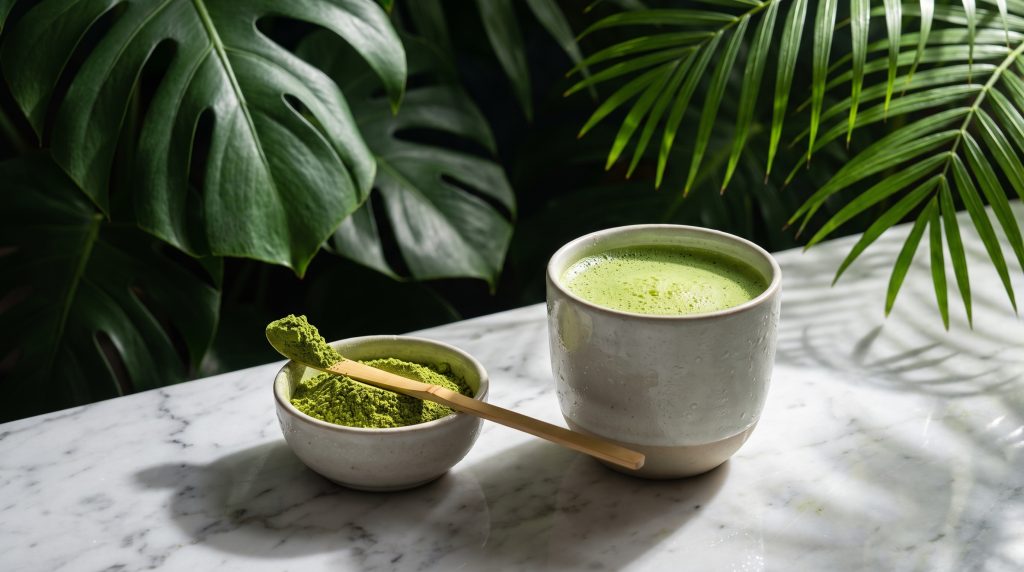
A standard 2g serving of matcha contains roughly 38–70mg of caffeine. The range reflects differences in matcha grade, growing conditions, and preparation. Compare that to a single espresso (approximately 63mg) and a flat white with a double shot (approximately 150mg). Matcha also contains L-theanine, which may change how that caffeine is experienced.
How much caffeine does matcha contain?
The short answer is 38–70mg per 2g serving of matcha powder — approximately one teaspoon. The wide range reflects genuine variability rather than vagueness.
Several factors affect how much caffeine ends up in your cup:
Grade and harvest. Ceremonial-grade matcha, made from first-harvest shade-grown leaves, tends to be at the higher end of the caffeine range. The shade-growing process that boosts L-theanine also concentrates caffeine in the leaves. Later-harvest culinary-grade matcha may contain less.
Shade-growing duration. Longer shade-growing (up to four weeks) produces higher L-theanine and caffeine concentrations. It’s part of why ceremonial-grade matcha from well-managed farms differs from lower-quality powder.
Amount of powder used. The standard measurement for a single serving is 2g (roughly one level teaspoon). Many cafés use 2–3g for a richer, more intense matcha. Doubling the powder roughly doubles the caffeine.
Region and cultivar. Different Camellia sinensis cultivars produce different caffeine concentrations, and regional growing conditions affect this further.
For practical purposes, assume 38–70mg per standard serving, with the higher end more likely for ceremonial-grade matcha from reputable sources.
How does that compare to other drinks?
This is the question most people are actually asking. Here’s a straightforward comparison:
| Drink | Serving | Approximate caffeine |
|---|---|---|
| Matcha (2g) | 250ml | 38–70mg |
| Espresso | 30ml (1 shot) | ~63mg |
| Filter coffee | 200ml | ~100–140mg |
| Flat white | 200ml (double shot) | ~150mg |
| Instant coffee | 200ml | ~65–100mg |
| Black tea | 200ml | ~40–70mg |
| Green tea (brewed) | 200ml | ~25–45mg |
| Decaf coffee | 200ml | ~5–15mg |
| Cola (330ml can) | 330ml | ~35–40mg |
| Energy drink (250ml) | 250ml | ~75–80mg |
| Babychino | Any | 0mg |
A few things are worth noting here. Matcha contains more caffeine per gram of powder than brewed green tea, because you’re consuming the entire leaf rather than a water-extracted infusion. When brewed green tea steeps in water, only a proportion of the caffeine dissolves; the rest stays in the leaf. With matcha, everything in the leaf ends up in your drink.
Compared to coffee drinks, a single serving of matcha sits below an espresso at the lower end of its range and well below a flat white. Most matcha drinkers consume roughly the same caffeine as a cup of tea, give or take.
What is L-theanine, and why does it matter?
L-theanine is an amino acid found in tea leaves — including the leaves used for matcha. It’s not present in coffee. Some studies suggest that L-theanine, in combination with caffeine, may support calm, sustained focus while moderating the jitteriness and anxiety that caffeine alone can produce in some people.
A serving of matcha (2g) provides roughly 10–20mg of L-theanine alongside its caffeine. The interaction between the two compounds is the most commonly cited reason why matcha’s caffeine feels different to many people compared to coffee — a more gradual onset and a sustained, even energy rather than a sharp spike and crash.
The research on this is promising rather than definitive. A 2008 study published in Biological Psychology found that the combination of caffeine and L-theanine improved attention and reduced susceptibility to distraction compared to caffeine alone. More large-scale trials would strengthen the evidence base, but the direction of research is consistent and the mechanism is plausible.
It’s worth noting that L-theanine moderates caffeine’s effects — it doesn’t eliminate them. Matcha still contains caffeine. If you’re sensitive to caffeine, you may still notice its effects in matcha, even if they feel gentler than with coffee.
How does caffeine absorption work in matcha?
Caffeine in matcha is absorbed through the digestive tract, just as it is from coffee. However, the presence of L-theanine and other compounds in matcha may slow this absorption slightly. Many matcha drinkers report a slower onset — around 30–40 minutes rather than 15–30 minutes for espresso — and a longer duration of effect.
This is partly why matcha is often recommended as a mid-morning or afternoon drink: its more gradual energy curve may be easier to time around sleep than coffee, though this is highly individual. Caffeine has a half-life of around five to six hours in most adults, meaning roughly half has been metabolised six hours after consumption. A matcha at 3pm may still be partially active at 9pm.
What do the guidelines say about caffeine limits?
Official guidance on caffeine comes from two main sources:
- For healthy adults: EFSA considers up to 400mg of caffeine a day safe for most healthy adults. One serving of matcha (38–70mg) represents less than 20% of this limit.
- For pregnant women: the NHS recommends a maximum of 200mg per day from all sources. A single matcha falls well within this, but total daily intake from all caffeinated drinks — matcha, tea, coffee, cola — should be counted together. Speak to your midwife about what’s right for your individual circumstances.
- For children: the NHS doesn’t set a specific limit for children but advises limiting caffeine intake generally. Younger children should avoid caffeinated drinks. At Framberry, our babychino (warm frothed milk) is caffeine-free.
A note on matcha lattes
When you order a matcha latte, you’re getting the same caffeine from the matcha powder as described above, plus the calories and sugar of the milk. The caffeine content doesn’t change with the addition of milk — only the calorie count does. A matcha oat latte at Framberry contains the same caffeine as the matcha concentrate, prepared with the same 2g of ceremonial-grade powder.
For a full comparison of matcha and coffee caffeine, energy curves, and when to choose each, see our post on matcha vs coffee.
Frequently asked questions
Does matcha have more caffeine than green tea?
Yes, significantly more per serving. Brewed green tea typically contains 25–45mg per 200ml cup. A matcha serving (2g) contains 38–70mg — and because you consume the whole leaf rather than an infusion, the caffeine is more fully absorbed.
Is matcha safe during pregnancy?
One serving of matcha contains 38–70mg of caffeine. The NHS recommends a maximum of 200mg per day during pregnancy from all sources. A single matcha typically fits within this limit, but you should count all your daily caffeine sources together and discuss your intake with your midwife.
Does matcha have caffeine even in a latte?
Yes. Adding milk to matcha does not reduce the caffeine content. A matcha latte has the same caffeine as the matcha concentrate it’s built on — roughly 38–70mg for a standard 2g serving.
Why does matcha feel different to coffee if the caffeine content is similar?
The L-theanine in matcha may moderate caffeine’s effects — some studies suggest it supports calm focus and reduces jitteriness. The slower absorption of caffeine in matcha (due to the presence of other compounds) may also produce a more gradual onset and longer duration compared to espresso.
Can I have matcha and coffee in the same day?
Yes, as long as total daily caffeine remains within sensible limits (under 400mg for healthy adults; under 200mg during pregnancy). A matcha (38–70mg) plus a flat white (150mg) is well within the healthy adult limit.
Matcha at Framberry is made with ceremonial-grade Japanese powder — no guessing about what’s in your cup. We’re opening in London in 2027. Join the list to find out where.