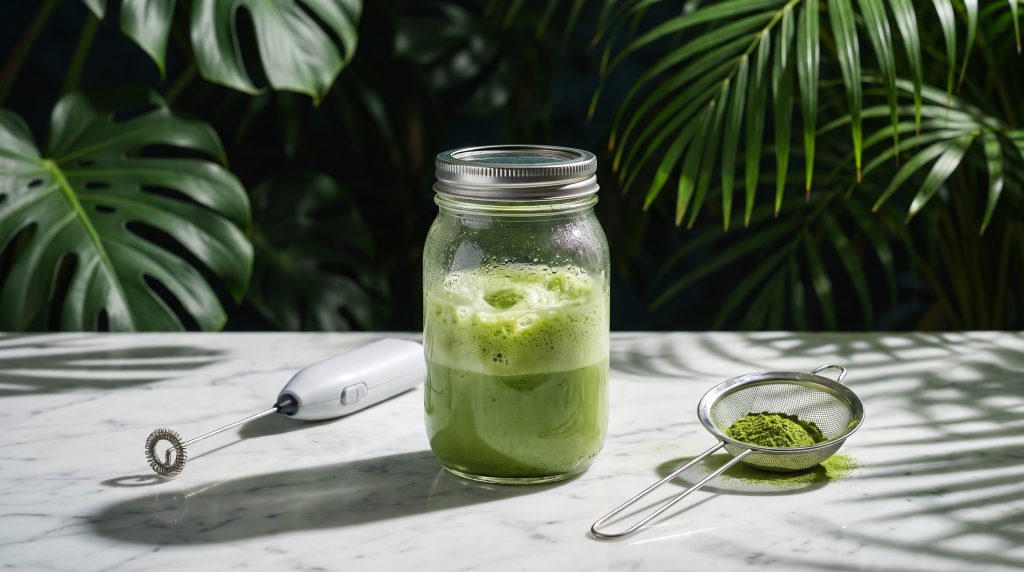
You don’t need a bamboo whisk to make good matcha. A small electric milk frother, a jar with a lid, a blender, or even a fork will all produce smooth, lump-free results — provided you sift the powder first and use water at 80°C rather than boiling. Here’s how each method works.
Why matcha clumps — and how to prevent it
Before getting into methods, it helps to understand why matcha tends to clump. Matcha is an extremely fine powder — finer than most food powders you’ll encounter. That fineness means the particles cling to each other and to moisture, forming stubborn lumps that are difficult to disperse once formed.
The two things that cause most matcha problems are skipping the sifting step and using water that’s too hot.
Sifting: Push your matcha through a fine mesh tea strainer or small sieve before adding any liquid. This takes about 10 seconds and makes a significant difference to the final texture. It breaks up clumps before they have the chance to bind with water.
Water temperature: Boiling water (100°C) denatures the amino acids in matcha that contribute to its sweetness and can make the drink bitter. It also tends to seal clumps rather than disperse them. Use water that has been heated to around 80°C — which you can achieve by boiling a kettle and leaving it to rest for about two minutes, or using a temperature-controlled kettle if you have one.
With those two steps in place, any of the following methods will work well.
Method 1: the jar-shake method (best for iced matcha)
This is the easiest cold-preparation method and produces excellent results for an iced matcha latte.
What you need: A jar with a tight-fitting lid (a standard mason jar works perfectly).
Steps:
1. Sift 2g of matcha into the jar.
2. Add 60–80ml of water at 80°C. Put the lid on tightly.
3. Shake vigorously for 20–30 seconds. The matcha will dissolve and a light froth will form.
4. Open the jar, add ice, then pour over cold oat or coconut milk.
Result: A smooth, frothy concentrate that works beautifully over ice. The shaking motion distributes the powder more evenly than stirring.
Best for: Iced matcha lattes, warm mornings, people who don’t want to wash a frother.
Method 2: electric milk frother (best all-round substitute)
A small handheld electric milk frother — the kind that costs under £10 and runs on AA batteries — is arguably the most practical everyday tool for making matcha at home.
What you need: A handheld milk frother, a deep enough cup or jug.
Steps:
1. Sift 2g of matcha into a cup or small jug.
2. Add 60ml of 80°C water.
3. Hold the frother in the matcha liquid and run it for 20–30 seconds, moving it slightly in a circular pattern.
4. The matcha will emulsify and develop a smooth foam on the surface.
5. Add steamed or frothed milk to complete the latte.
Result: Very close to a traditional whisk result. The texture is smooth, the froth is good.
Best for: Daily home use, hot matcha lattes.
Method 3: blender (best for large batches or smoothie matcha)
A blender works particularly well when you’re making matcha as part of a larger drink — a matcha smoothie, for instance — or making a batch for multiple people.
What you need: A standard blender.
Steps:
1. Sift 2g of matcha per person into the blender.
2. Add 60ml of 80°C water per serving.
3. Blend on low–medium for 15–20 seconds.
4. Add your milk and blend briefly again, or pour into cups over the milk.
Result: Very smooth. Blenders handle clumps better than most methods because of the blade speed and volume. The texture will be extremely fine.
Best for: Matcha smoothies, batch preparation, large servings. Overkill for a single cup.
Method 4: electric hand whisk or milk frother wand
If you have an electric hand whisk — the kind used for whipping cream — it can be repurposed for matcha. A standing frother wand (the type used with bean-to-cup machines) also works.
Steps:
1. Sift 2g of matcha into a deep cup or small bowl.
2. Add 60ml of 80°C water.
3. Run the electric whisk in the liquid for 20–30 seconds until fully incorporated and frothy.
4. Add to your milk as normal.
Result: Excellent — comparable to the handheld frother and in some cases better.
Best for: People who already have this equipment in the kitchen. Very good option.
Method 5: fork (genuinely works, but takes effort)
The fork method requires the most physical effort of the five, but it works.
Steps:
1. Sift 2g of matcha into a bowl or deep cup.
2. Add a small amount of 80°C water — 20–30ml only.
3. Use a fork to work the powder into the water in a vigorous circular and chopping motion, pressing clumps against the side of the cup. This takes about 60–90 seconds of consistent effort.
4. Once a smooth paste forms, add the remaining 40–50ml of water and continue whisking.
5. Add to your milk.
Result: Decent. Not as smooth as the frother methods, and it takes considerably longer. But in a situation where you have no other equipment, it absolutely works.
Best for: Emergencies. When you really want matcha and have nothing else.
A note on temperature: why it matters
We’ve mentioned 80°C water several times. This is worth a brief explanation.
Green tea leaves — and therefore matcha — contain amino acids including L-theanine that contribute to the drink’s characteristic umami sweetness. Boiling water (100°C) can break these down, stripping out that sweetness and leaving a more bitter, harsh result. 80°C preserves more of the delicate compounds that make high-quality matcha worth drinking.
If you don’t have a temperature-controlled kettle, the practical method is simple: boil your kettle, pour the water, and leave it for approximately two minutes before adding the matcha. It will have cooled to around 80°C.
For more on making the perfect matcha latte step by step, see our complete matcha guide.
At Framberry, we prepare every matcha to order using ceremonial-grade Japanese powder and temperature-controlled water. We’re opening in London in 2027 — join the list if you’d like to know where.
Frequently asked questions
Can you make matcha without a whisk?
Yes, easily. An electric milk frother is the best everyday alternative. A jar-shake method works well for iced matcha. A blender handles it for larger batches. Even a fork will work with enough effort.
Why is my matcha lumpy?
Clumps form when matcha powder binds with liquid before being properly dispersed. Sifting the powder before adding water breaks up pre-formed clumps. Using 80°C water rather than boiling also helps — boiling water can seal clumps. Using a frother or shaking vigorously ensures full dispersion.
What temperature should water be for matcha?
Around 80°C. Boiling water can make matcha bitter by breaking down the amino acids responsible for its characteristic sweetness. Boil a kettle and leave the water for two minutes to reach approximately 80°C, or use a temperature-controlled kettle.
Can I make matcha with cold water?
Yes, particularly for iced versions. The jar-shake method works well with cold or room-temperature water for iced matcha. Dissolving in a small amount of warm water first, then adding cold water and ice, gives a cleaner result.
Every matcha at Framberry is prepared to order with temperature-controlled water and ceremonial-grade powder — no lumps, no bitterness. We’re opening in London in 2027. Join the list.