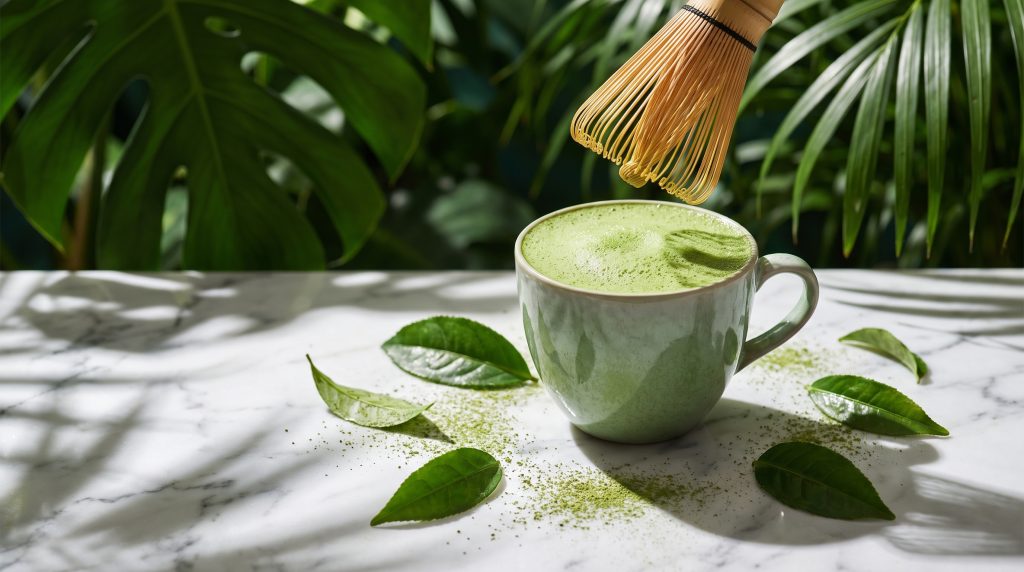
Good matcha tastes umami and grassy with a mild sweetness and very little bitterness. Poor-quality matcha tastes harsh, bitter, and flat. The difference is almost entirely down to grade, growing conditions, and how it is prepared — get those right, and matcha is one of the most distinctive and satisfying drinks you can order.
Taste is the question that puts a lot of people off before they have even tried matcha. They have read that it is “earthy” or “grassy” and assumed that means it will taste like a lawnmower. It does not — or at least, it should not. Here is an honest account of what to expect.
The core flavour profile
Ceremonial-grade matcha has a flavour that does not map neatly onto anything else. The closest single word is umami — that savoury-sweet depth that also shows up in miso, aged cheese, and mushrooms. Underneath that, you get:
- Grassy and vegetal — a fresh, green quality similar to raw peas or steamed spinach, but softer
- Mildly sweet — not sugary sweetness, more the natural sweetness of very fresh produce
- A hint of bitterness — present but well in the background in good matcha; it gives the drink its character without overpowering anything
- Creamy finish — something in the texture and the way good matcha lingers on the palate that people often describe as velvety
That combination — umami-led, green, slightly sweet, smooth — is why matcha has such a devoted following. It is complex without being difficult.
Ceremonial grade vs culinary grade: a significant taste difference
The two main grades of matcha taste noticeably different, and understanding why helps explain why grade is worth caring about.
Ceremonial-grade matcha uses first-flush leaves — the youngest, most tender growth of the season — from plants that have been shaded for three to four weeks. The shading process increases L-theanine and chlorophyll while reducing the conversion of amino acids into bitter catechins. The result is sweeter, smoother, and more nuanced.
Culinary-grade matcha uses later-harvest leaves, which have been in full sun. These have higher levels of bitter catechins and less L-theanine. The colour is duller (yellower-green) and the flavour is sharper and more aggressively bitter. Culinary grade is fine when it is one ingredient among several in a recipe — it works well in a cake or smoothie — but drunk straight or as a latte with minimal sweetener, the bitterness can be overwhelming.
This is why cheap matcha often tastes bad. It is not that you dislike matcha — it is that you tried the wrong grade.
How does matcha compare to green tea?
Matcha comes from the same plant as green tea, and the flavour families are related. But they are not interchangeable. Green tea (steeped from leaves or a bag) tends to taste lighter, cleaner, and more delicate. Matcha is more concentrated, more intensely green, and has a thicker texture because you are drinking the suspended powder, not just an infusion of it.
If you enjoy green tea, you will almost certainly enjoy good matcha. If you have only tried cheap green tea bags and found them bitter, it is worth trying ceremonial matcha before writing the category off — they are quite different experiences.
Why does temperature affect the taste?
Water temperature matters more for matcha than for most drinks. The ideal temperature is around 80°C — noticeably below boiling (100°C). Hot water above 85–90°C can denature delicate amino acids and intensify bitterness by extracting catechins more aggressively.
If you have ever made matcha and found it bitter or slightly harsh, the water being too hot is one of the most common causes. Let boiled water sit for two minutes before whisking, or use a temperature-controlled kettle.
Matcha latte vs straight matcha: does it taste different?
Yes — quite significantly. Whisked straight into water (the traditional way), matcha is intense, grassy, and umami-forward. The flavour is concentrated and there is nothing softening it.
Made as a matcha latte with oat or coconut milk, the flavour becomes creamier, milder, and more approachable. The umami is still there in the background, but the milk rounds the edges. Most people new to matcha find the latte a gentler introduction, which is exactly why we recommend starting there.
A matcha latte with a small amount of honey or agave sits in the territory that converts the most people: you can taste the matcha clearly but the sharpness is taken off, and the drink is genuinely enjoyable without needing much sweetener to get there.
What about iced matcha?
Iced matcha served over ice with cold milk has a slightly different character again. Cold temperatures tend to mute bitter notes and emphasise sweetness, so iced matcha lattes often feel milder and more refreshing than their hot equivalent. The green, vegetal quality is still present but softer.
Our strawberry matcha — ceremonial-grade matcha with strawberry and oat milk — works particularly well iced: the fruity sweetness and the earthy matcha play off each other in a way that surprises a lot of first-timers.
What does Framberry’s matcha taste like?
We use ceremonial-grade Japanese matcha across our whole menu. That means the baseline flavour — before anything else is added — is smooth, umami-rich, mildly sweet, and properly green without being aggressive. We prepare it at 80°C and whisk it properly, which makes a more significant difference to the end result than most people expect.
If you have tried matcha at a café and found it bitter or flat, it is worth giving it another try when we open. We are opening in London in 2027 — join our interest list to be the first to know.
For everything else you might want to know about matcha, our matcha guide covers the full story. If you are ready to try making it at home, our post on how to drink matcha has all the basics.
Frequently asked questions
Does matcha taste like tea?
It comes from the same plant as green tea, so there is a family resemblance — both have a fresh, green, slightly vegetal quality. But matcha is considerably more concentrated and has a distinctive umami depth that steeped green tea does not. They are related but not interchangeable.
Is matcha supposed to be bitter?
A small amount of bitterness is natural and part of the character. Intense or unpleasant bitterness usually signals low-grade matcha, water that is too hot, or too much powder relative to liquid. Ceremonial-grade matcha prepared correctly should be smooth and pleasant.
Does matcha taste like grass?
There is a green, grassy quality to good matcha, but it is much more pleasant than that description suggests. Think steamed fresh vegetables or fresh peas — bright and clean rather than sharp or earthy. The dominant note in good matcha is umami, not grass.
Does a matcha latte taste sweet?
An unsweetened matcha latte has a natural mild sweetness from the ceremonial-grade matcha and the oat milk, but it is not sweet the way a syrup-based coffee drink is. It is savoury-sweet, which takes a sip or two to settle into. Many people add a small amount of honey or syrup initially and find they need less over time.
Why does my matcha taste bitter?
Three most common causes: the matcha is culinary grade rather than ceremonial; the water was too hot (above ~85°C); or too much powder was used. Start with 1–2g of good ceremonial-grade matcha in water at around 80°C and adjust from there.
The best way to understand what matcha tastes like is to taste it. We are opening in London in 2027 — join the interest list and come and try a proper cup when we’re ready.