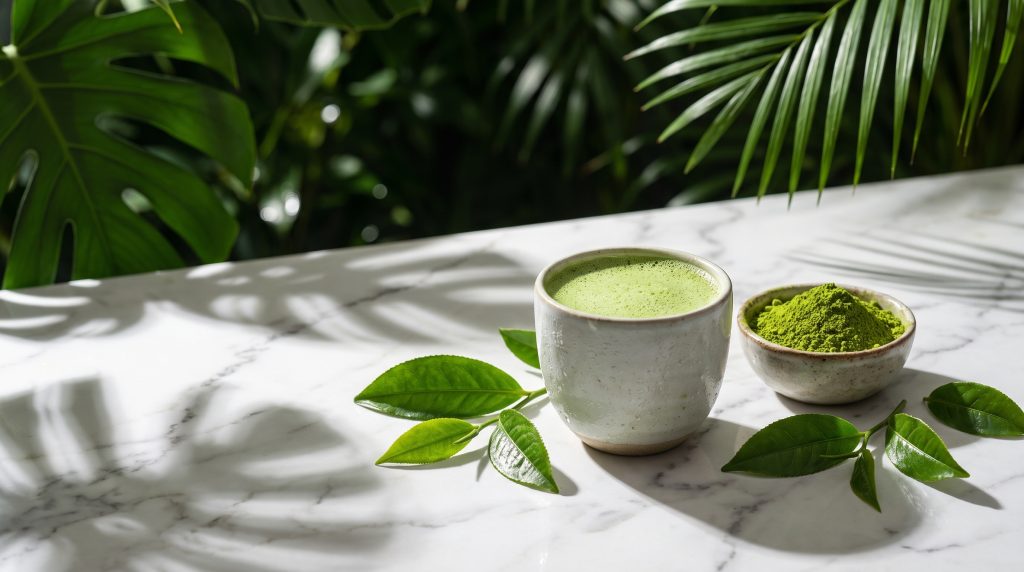
Matcha contains a concentrated range of compounds — EGCG antioxidants, L-theanine, caffeine, vitamins, and minerals — that have attracted serious research interest. The honest answer is that some studies suggest meaningful benefits, but most research is still at an early stage, and no single food does everything its fans claim. Here is what the science actually shows.
The wellness world has a habit of crowning a new superfood every few years. Matcha has been one of the more durable entries on that list, partly because the science behind it is more substantial than most, and partly because, unlike a lot of health trends, it is simply pleasant to drink.
But at Framberry we are not interested in overclaiming. What follows is an honest look at what the research says matcha may offer, what remains unclear, and where to keep your expectations grounded.
What is in matcha that makes it interesting?
Before we get to the potential benefits, it helps to understand what you are actually consuming. Matcha is stone-ground whole leaf powder from shade-grown Camellia sinensis plants. Because you consume the whole leaf rather than an infusion of it, the concentration of compounds is higher than you would get from a cup of steeped green tea. The key ones are:
- EGCG (epigallocatechin gallate) — the primary catechin antioxidant in green tea, present in particularly high amounts in matcha
- L-theanine — an amino acid concentrated by the shade-growing process
- Caffeine — approximately 38–70mg per 2g serving
- Chlorophyll — the pigment responsible for its colour
- Vitamins and minerals — including vitamin C, vitamin K, and potassium
EGCG antioxidants: what the research says
EGCG is the most-studied compound in matcha. It belongs to a family of plant polyphenols, and some research suggests it may have antioxidant, anti-inflammatory, and other properties.
A number of laboratory and early-stage human studies have looked at EGCG’s potential effects on cardiovascular health, blood sugar regulation, and cellular health. Some studies suggest that regular green tea consumption is associated with reduced markers of cardiovascular risk in certain populations, and researchers believe EGCG may contribute to this.
However, it is important to be clear about what this means in practice. Much of the research involves high-dose supplements or laboratory conditions rather than ordinary dietary intake. The European Food Safety Authority (EFSA) has reviewed green tea catechin claims and concluded that the evidence does not currently support approved health claims for EGCG in the EU. The NHS similarly recommends caution around superfood claims, noting that the research is promising but often preliminary.
What we can say: matcha is a genuine source of EGCG. Whether drinking one or two cups a day produces measurable health benefits over and above an otherwise balanced diet is not yet definitively established.
L-theanine and focus: the calm-alertness question
L-theanine is perhaps the compound that generates the most personal testimony from matcha drinkers. Many people report that the alertness they get from matcha feels smoother and less edgy than coffee — a state sometimes described as “calm focus.”
Some research supports this observation. Studies suggest that L-theanine may moderate some of the physiological stress responses associated with caffeine — including reducing feelings of anxiety and jitteriness — while preserving alertness. A frequently cited study by Kimura et al. (2007) found that L-theanine reduced psychological and physiological stress responses in subjects.
The L-theanine and caffeine combination in matcha has been studied as a pairing: some research suggests the two together may produce better attention and reaction time than either alone. Again, this research is suggestive rather than conclusive, and individual responses vary considerably.
Caffeine for alertness
Matcha does contain caffeine — around 38–70mg per 2g serving. Caffeine’s effects on alertness and concentration are among the most well-established in nutritional science. The NHS recognises that caffeine promotes wakefulness, and EFSA notes it is safe for most healthy adults up to 400mg per day total from all sources.
So while “caffeine makes you more alert” is not a dramatic wellness claim, it is one of the better-supported ones, and it explains a significant portion of the energy matcha drinkers experience.
What about weight management, blood sugar, and other claims?
You will find articles online claiming matcha speeds up metabolism, burns fat, controls blood sugar, and improves skin. The scientific picture here is more modest.
Some animal and laboratory studies have looked at EGCG and fat oxidation. Some small human studies have found modest associations between green tea consumption and blood sugar markers. But the evidence is not strong enough to support these as reliable, clinically meaningful outcomes from normal dietary consumption of matcha. We will not be claiming matcha helps you lose weight or controls your blood sugar, because that would go beyond what the evidence currently supports.
Calories, sugar, and what plain matcha actually contains
Plain matcha powder contains virtually no calories and no sugar. A 2g serving of matcha whisked into hot water is essentially a zero-calorie drink. This changes, of course, when you add milk, syrups, or other ingredients — a matcha latte with oat milk contains whatever calories are in the milk.
For people trying to reduce sugar or find a flavourful alternative to heavily sweetened drinks, plain matcha or an unsweetened matcha latte is a reasonable choice.
A note on pregnancy and caffeine
If you are pregnant, the NHS recommends keeping total caffeine consumption below 200mg per day. A single 2g serving of matcha sits well below that threshold at 38–70mg, but if you are combining matcha with coffee, tea, chocolate, or cola, it is worth keeping the total in mind. If in doubt, speak to your midwife or GP.
Very high doses of EGCG from supplements (not from ordinary food or drinks) have been associated with liver concerns in some case reports, though these involve supplement doses far beyond what you would consume by drinking matcha. Ordinary matcha consumption at one or two servings a day is considered safe for most healthy adults.
The honest summary
Matcha is a genuinely interesting ingredient with a reasonable evidence base behind its main compounds. Some studies suggest that regular consumption may support cardiovascular health, calm-alert focus, and antioxidant intake. The research is more compelling than most wellness trends, but less definitive than its most enthusiastic advocates claim.
Drink it because it tastes good, because the ritual suits you, and because a calm cup of something in the morning is a reasonable thing to build into your day. The potential benefits are a bonus, not a guarantee.
For a closer look at what goes into matcha and why it is made the way it is, our matcha guide is a good starting point. You can also read more about how much matcha to drink per day and how it compares to coffee.
Medical disclaimer: This article is for informational purposes only and does not constitute medical advice. If you have a health condition, are pregnant, or take medication, consult a qualified healthcare professional before making changes to your diet.
Frequently asked questions
Is matcha healthier than coffee?
They are different drinks with different profiles. Matcha contains L-theanine, EGCG catechins, and a moderate caffeine dose; coffee contains higher caffeine and different antioxidants (mainly chlorogenic acid). Neither is clearly “healthier” in a straightforward sense — both can be part of a balanced diet. For a detailed comparison, see our post on matcha vs coffee.
Does matcha have more antioxidants than green tea?
Yes, generally. Because matcha is made from the whole ground leaf rather than an infusion, the concentration of EGCG and other catechins per serving tends to be higher than a cup of steeped green tea. Exact amounts vary by grade and preparation.
Can matcha give you jitters?
It contains caffeine, so it can — particularly if you are sensitive to caffeine or consume a lot at once. Many people find the effect milder than coffee, which some researchers attribute to L-theanine moderating the caffeine response. If you are caffeine-sensitive, start with half a serving and see how you feel.
How much matcha is too much?
Most guidance suggests one to two servings (2g each) per day is reasonable for healthy adults. EFSA considers up to 400mg of caffeine a day safe for most healthy adults, and the NHS advises no more than 200mg a day during pregnancy. See our full guide on how much matcha per day for more detail.
Is matcha safe during pregnancy?
In moderation, yes. The main consideration is caffeine: the NHS recommends a maximum of 200mg per day during pregnancy, and a single 2g serving of matcha contains roughly 38–70mg. Always check with your midwife or GP if you are unsure about your total caffeine intake.
We brew ceremonial-grade Japanese matcha at Framberry — opening in London in 2027. Join the interest list to hear when we open the doors.