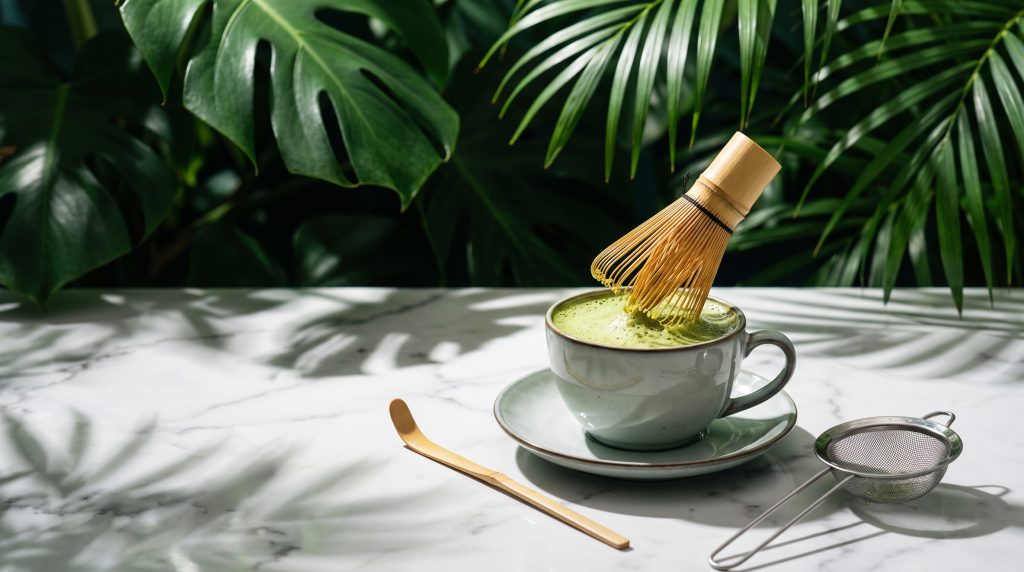
The traditional Japanese method is simple: sift 2g of ceremonial-grade matcha into a bowl, add 80ml of water at 80°C, and whisk with a bamboo whisk (chasen) using a brisk W-shaped motion until foamy. For a latte, whisk the matcha in a small amount of hot water first, then add steamed or cold milk. Both methods take under three minutes.
There is no single right way to drink matcha — the “right” way is the one that suits your morning and makes the cup taste good. But there are definitely wrong ways: water that is too hot, too much powder, not enough whisking, low-grade matcha. Get those wrong and the drink will be bitter and flat. Get them right and matcha is one of the more satisfying things you can make at home.
Here are the two main approaches, the equipment you need, and the mistakes worth avoiding.
Method 1: Traditional Japanese matcha (usucha)
In Japanese tea culture, the most common preparation is usucha, or “thin tea” — a relatively light preparation whisked in a ceramic bowl (chawan). This is matcha as it was designed to be experienced: nothing added, just powder and water, drunk from the bowl.
What you need
- Matcha bowl (chawan) — a wide, shallow bowl with room to whisk; a regular bowl works fine
- Bamboo whisk (chasen) — the traditional tool; 80–100 tines; gives the best froth
- Bamboo scoop (chashaku) — measures approximately 2g; a teaspoon is a good substitute
- Fine sieve — optional but helpful; sifting removes clumps
- Temperature-controlled kettle — or a standard kettle with a thermometer
How to make traditional matcha (usucha)
- Heat your bowl. Pour a little hot water into the matcha bowl and swirl it to warm the ceramic. Pour it away and dry the bowl. This keeps your matcha from cooling too quickly.
- Sift the matcha. Spoon 1–2g of matcha (roughly ½–1 teaspoon) through a fine sieve into the bowl. Sifting removes clumps and helps the matcha dissolve more evenly.
- Add water at 80°C. Pour approximately 70–80ml of water at 80°C over the matcha. If you are using a standard kettle, boil the water and leave it to sit for two minutes before using it.
- Whisk. Using your bamboo whisk, whisk briskly in a W or M shape — not circles — until the matcha is fully incorporated and a light foam has formed on the surface. This usually takes about 30–45 seconds of vigorous whisking.
- Drink immediately. Matcha begins to settle quickly; drink it while the foam is still on top.
Usucha is typically drunk in a few slow sips, without milk or sweetener. The flavour is intense and direct. If this feels too strong to start with, a matcha latte is a gentler introduction.
Method 2: Matcha latte (hot or iced)
A matcha latte — matcha whisked into a small amount of hot water, then topped with steamed milk — is the format most people in the UK encounter first, and a perfectly legitimate way to enjoy the drink. Nothing is being watered down or hidden; the matcha flavour comes through clearly, but the milk softens the intensity.
How to make a matcha latte
- Sift 2g of matcha into a cup or small bowl.
- Add 30–40ml of water at 80°C and whisk until smooth and slightly foamy. Getting the matcha fully incorporated at this stage, before adding milk, is important — if you add milk directly to dry matcha powder, it tends to clump.
- Add 150–200ml of steamed or heated oat milk (or your milk of choice). Stir gently to combine.
- Sweeten if you like — a small amount of honey, agave, or maple syrup works well. Start with less than you think you need; good ceremonial matcha has its own natural sweetness.
For iced matcha: follow steps 1–2, then pour the matcha concentrate over a glass of ice and add cold oat milk. Stir and serve immediately.
What if you do not have a bamboo whisk?
A bamboo whisk produces the best froth, but alternatives work:
– A small electric milk frother whisked directly into the cup is the most practical substitute and produces a decent foam
– A jar with a lid — add matcha and water, seal, and shake vigorously; froth will not last, but the matcha incorporates well
– A standard whisk can work in a bowl, but the tines are too widely spaced to produce a fine foam
We cover this in more detail in our post on how to make matcha without a whisk.
The most common mistakes
Water too hot. Anything above around 85°C can make matcha taste bitter and harsh. 80°C is the sweet spot. Boiled-then-rested for two minutes is a reasonable approximation without a thermometer.
Too much matcha. 2g (roughly half a teaspoon) is the standard single serving. More is not better — it tends to produce bitterness rather than more flavour.
Skipping the sift. Matcha powder clumps. Un-sifted matcha added directly to water produces a lumpy, unevenly dissolved drink. Thirty seconds with a sieve makes a real difference.
Adding milk before whisking. If you are making a latte, always whisk the matcha into a small amount of hot water first. Milk makes it harder to get the powder fully dissolved.
Using the wrong grade. Culinary-grade matcha in a latte will taste harsh and bitter regardless of technique. Ceremonial grade is worth the extra cost for drinking.
How much matcha per day?
One to two servings (2g each) per day is a reasonable amount for most healthy adults. For more on this, see our post on how much matcha per day.
How Framberry prepares matcha
We prepare all our matcha at 80°C using ceremonial-grade Japanese powder, whisked properly before milk is added. The result is a smooth, properly incorporated drink without bitter edges. We are opening in London in 2027 — join the interest list to hear when we open.
Our full matcha guide is a good companion to this one if you want to understand more about what you are drinking.
Frequently asked questions
Do you have to use a bamboo whisk for matcha?
No — a bamboo whisk (chasen) produces the best results and the finest foam, but a small electric milk frother is a perfectly good substitute for everyday use. A sealed jar with vigorous shaking also works for a basic preparation.
What milk is best for a matcha latte?
Oat milk is the most popular choice and for good reason — its natural sweetness and creamy texture complement matcha well and do not overpower the flavour. Coconut milk adds a tropical note that works particularly well iced. Full-fat dairy milk also works if you prefer it.
Should I sweeten matcha?
Ceremonial-grade matcha has a natural mild sweetness and does not need sweetener to be pleasant. Whether you add any is entirely personal — a small amount of honey or agave can make the drink more approachable when you are starting out. Over time, many people find they use less and less.
What temperature should matcha water be?
Around 80°C is ideal. Hotter than about 85°C and you risk bitterness; cooler than 70°C and the matcha may not dissolve as well. If you are using a standard kettle, boiling water left to rest for two minutes is a reasonable approximation.
Can you drink matcha cold?
Yes — iced matcha is excellent. Whisk the matcha into a small amount of hot water first (still at 80°C), then pour over ice and add cold milk. Do not try to dissolve matcha powder directly in cold water — it will clump badly.
Ready to try the real thing? We use ceremonial-grade Japanese matcha prepared the right way, and we are opening in London in 2027. Join the interest list to be among the first in.